Weight Cutting and Weigh-Ins Explained: Why Fighters Make Weight
Official vs ceremonial weigh-ins, penalties for missing weight, the IBF's fight-morning check, ONE's hydration tests and why weight cuts worry doctors.
Every combat sports fight week has the same ritual: two fighters strip down, step on a scale and hope the number is right. Weigh-ins exist because weight classes exist, and weight classes exist to keep fights fair. But the way fighters approach the scale has turned weigh-ins into one of the most debated parts of boxing and MMA.
This guide explains how weigh-ins work, what happens when a fighter misses weight, how some organizations try to limit extreme cuts, and why the practice concerns doctors and regulators. It is general information about the rules, not advice on cutting weight. Anyone thinking about changing their weight for competition should work with a qualified medical professional and a registered dietitian.
Why Weigh-Ins Exist
Size matters in a fight. A heavier fighter can usually hit harder and absorb more, and in grappling sports extra mass makes control easier. Weight classes, such as the 17 divisions described in our guide to boxing weight classes or the divisions in our UFC weight classes explainer, group fighters of similar size so that skill rather than mass decides the result.
The weigh-in is how the rule is enforced. Each bout is contracted at a weight, either a division limit or an agreed catchweight, and each fighter must prove they’re at or under it before the bout can go ahead as planned.
The complication is timing. In most professional boxing and MMA today, the official weigh-in happens the day before the fight. That leaves roughly a day to regain weight. The result is that many fighters weigh far less on the scale than they do when they actually compete, because they dehydrate to make the limit and rehydrate afterward. Being the biggest fighter in your division is widely seen as an advantage, so the incentive to cut is strong.
Official Weigh-Ins vs Ceremonial Weigh-Ins
Many fans only see one weigh-in, but big events usually have two.
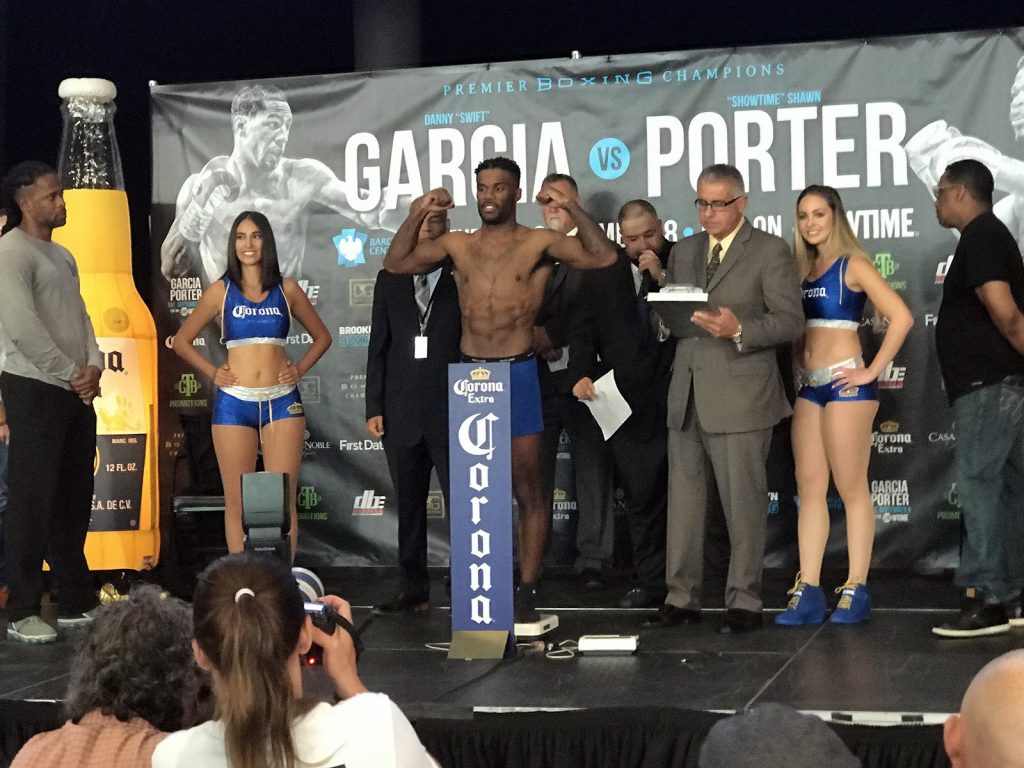
The official weigh-in
This is the one that counts. It is overseen by the athletic commission or regulator, often early in the morning, and frequently in a hotel room rather than on a stage. Fighters step on a calibrated scale, the weight is recorded, and that is the number that decides whether the bout goes ahead as contracted.
MMA moved strongly toward morning official weigh-ins in the mid-2010s. At UFC 200 in July 2016, for example, the Nevada commission approved early weigh-ins for the first time, with fighters allowed to weigh in between 8 a.m. and 10 a.m. The idea was to give fighters more time to recover before the fight.
The ceremonial weigh-in
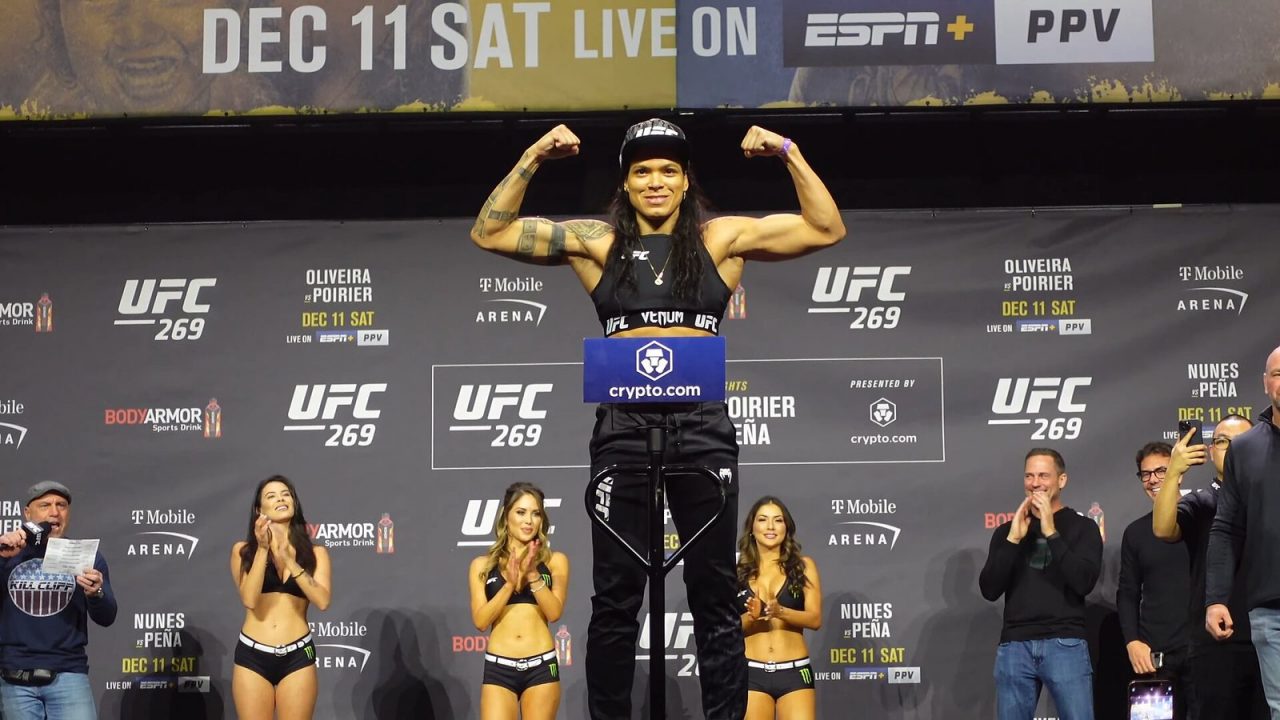
Later the same day, promoters often hold a public weigh-in for fans and media: the face-off photos, the posing, the crowd. By then the official weights are already in the books. Fighters may have started rehydrating, so the number on the scale at a ceremonial event is not meaningful.
What Happens When a Fighter Misses Weight
Missing weight is handled by a mix of commission rules, sanctioning-body rules and fight contracts, so details vary. The common pattern looks like this:
- Stripping or a small allowance: if a fighter is only fractionally over, they may be allowed to strip completely behind a towel and step back on.
- Extra time: some jurisdictions allow a short window, often described as up to two hours, to try again. Other events have used a fixed window with no extra time; at UFC 200, the weigh-in window itself was the full allowance.
- A purse penalty: in MMA, a fighter who misses weight commonly forfeits a percentage of their purse, frequently to the opponent. At UFC 200, Johny Hendricks came in a quarter pound over the welterweight limit and was fined 20 percent of his purse.
- The fight changes status: a title fight can become a non-title bout, or the bout proceeds at a catchweight if the other fighter agrees.
- Cancellation: if the miss is large, the opponent or the commission may refuse to go ahead.
In boxing, a champion who misses weight generally loses the title on the scale, and the fight may go ahead with only the opponent eligible to win the belt. Sanctioning bodies set their own rules on this, which is one reason the four major organizations, covered in our guide to the WBA, WBC, IBF and WBO, can treat the same situation differently.
Rehydration Limits: The IBF’s Second Weigh-In
Day-before weigh-ins opened the door to large rebounds. A fighter who weighs in at the division limit may step into the ring well above it. A few organizations limit how much weight can come back.
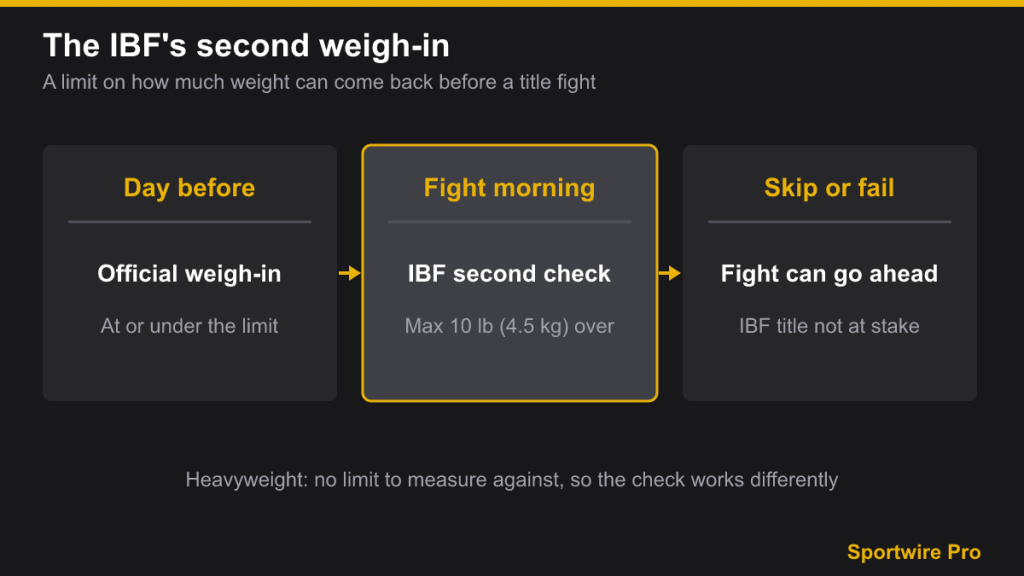
The best-known example in boxing is the IBF. In IBF title fights, boxers must take a second weight check on the morning of the fight, in addition to the official weigh-in the day before. Under the widely reported rule, a boxer can be no more than 10 pounds (4.5 kg) above the weight limit at that check. It is often described as a rehydration clause.
If a boxer skips the second check or fails it, the fight can still happen, but the IBF title is not at stake for that boxer. In heavyweight title fights there is no upper limit to measure against, so the check functions differently, with sanctions only for failing to submit to it.
The rule aims to keep fights closer to the weight class the belt represents. Critics argue that a fight-morning check can encourage a second, smaller cut, while supporters say it discourages the most extreme strategies.
Commission Approaches: California’s Fight-Night Checks
Athletic commissions in the US have also tried to discourage extreme cuts. The California State Athletic Commission (CSAC) is the most cited example.
- CSAC tracks the difference between each fighter’s official weigh-in weight and their weight on fight night.
- Fighters who regained more than 10 percent of their weigh-in weight were generally recommended to move up a weight class for future fights in California.
- In October 2019, the commission voted 5-0 to go further and cancel fights in which an athlete regains more than 15 percent of their contracted weight by fight night, with the rule taking effect about a year later.
CSAC data reported at the time showed that 28 of 285 MMA bouts between January and October 2019 involved fighters who weighed more than 15 percent above the contracted weight on fight night. The commission’s executive officer described extreme cutting as a health and safety issue.
ONE Championship’s Hydration Testing
ONE Championship, the Singapore-based promotion, took the most radical approach. In December 2015, 21-year-old Chinese fighter Yang Jian Bing died of complications linked to dehydration from weight cutting ahead of a ONE event in the Philippines. The promotion then overhauled its system and banned weight cutting through dehydration.
Under ONE’s weigh-in rules:
- Athletes take a combined hydration test and weigh-in 24 to 48 hours before the event.
- Hydration is checked through urine specific gravity (USG). An athlete is considered hydrated at a USG of 1.025 or below.
- An athlete who fails the hydration test cannot weigh in until they pass it. If they pass hydration but miss weight, they can try again within a three-hour testing window, but hydration and weight have to be passed together.
- An athlete who still cannot pass within the window may weigh in hydrated afterward to negotiate a catchweight bout, which requires both athletes to be within 105 percent of each other’s official hydrated weight. The athlete who failed forfeits a percentage of the purse to the opponent.
Because athletes must be hydrated on the scale, ONE’s divisions are set higher than the classic Unified Rules limits. ONE lists its lightweight division, for example, as 155 to 170 pounds, and its flyweight division as 125 to 135 pounds. The goal is that fighters weigh in close to the weight they actually compete at.
Why Doctors Worry About Weight Cuts
The concern with rapid weight cutting is mainly about dehydration. Fighters who cut hard in the final days typically lose water through methods such as restricting fluids, sweating in saunas or hot baths, and wearing sweat suits. Medical and regulatory bodies have raised several general concerns:
- Performance and recovery: severe dehydration can leave athletes drained, and rehydration within a day may not fully reverse its effects.
- Heat illness and organ stress: extreme cuts can place serious stress on the body, and deaths linked to weight cutting, such as the 2015 case that changed ONE’s rules, have occurred.
- Fairness: when one fighter rebounds dramatically and the other doesn’t, the contest can end up between athletes who are effectively in different weight classes.
This is a regulatory and sporting overview, not medical guidance. Amateur and recreational athletes in particular should never attempt dehydration-based cuts and should consult a doctor or sports dietitian before trying to change weight for competition.
Amateur and Same-Day Weigh-Ins
Amateur combat sports often handle weight more strictly. In amateur boxing tournaments, boxers must make weight at the initial weigh-in with no second chance, and those who miss are eliminated, though a boxer may be moved to another class if the tournament has space. Because amateur tournaments can involve bouts on consecutive days, weigh-ins are typically held closer to competition, which limits how much weight can be regained.
Quick Answers
Why don’t all promotions use same-day weigh-ins?
Same-day weigh-ins reduce rebounds, but fighters who still cut hard would then compete with no time to recover, which many see as more dangerous. Day-before weigh-ins plus limits on rebounds, or hydration testing, are attempts to balance the two concerns.
Does missing weight mean the fighter was unprofessional?
Not always. Fighters miss weight for many reasons, including illness, short-notice bookings and failed cuts. Regulators still apply the penalties because the contracted weight is part of the agreement both sides signed.
Can a fighter who missed weight still win the title?
Generally no. In boxing and MMA, a fighter who misses the championship limit is typically not eligible to win the belt, even if the bout goes ahead.