Mike Tyson’s Career and Legacy: The Youngest Heavyweight Champion
Mike Tyson's boxing story: Cus D'Amato and the peek-a-boo style, becoming the youngest heavyweight champion in 1986, the Buster Douglas upset and his later career.
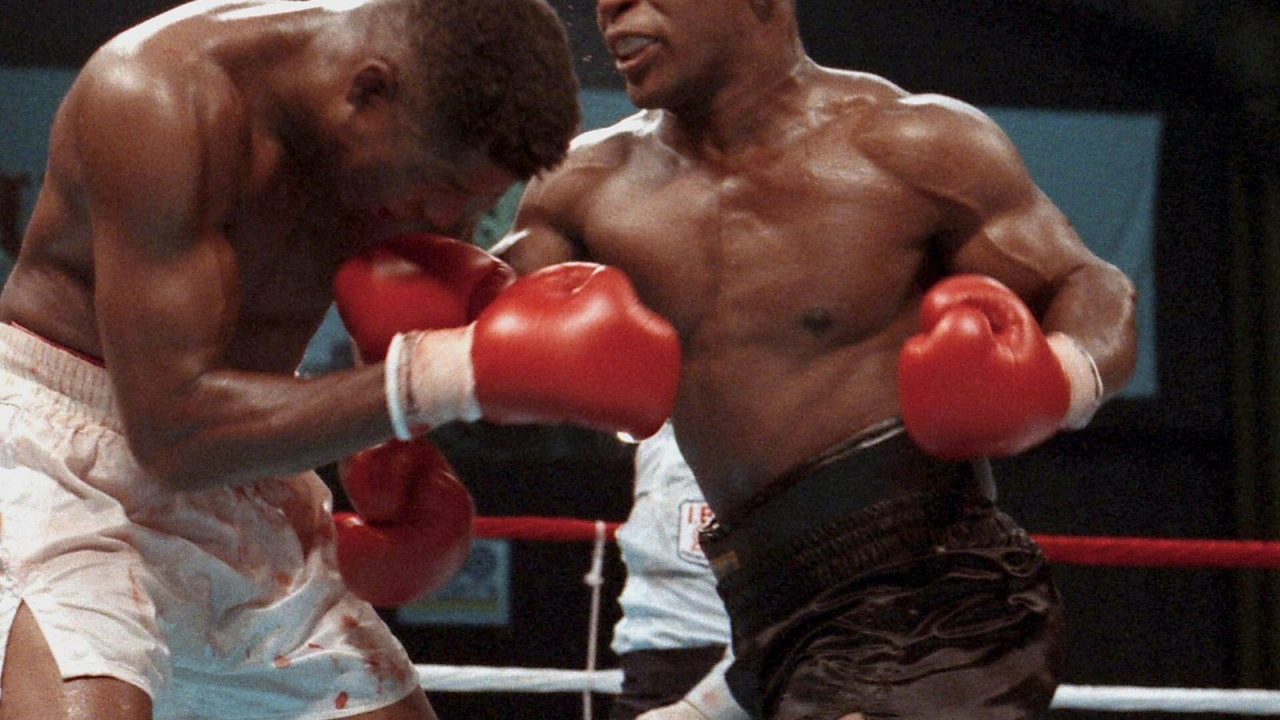
Few boxers have been as famous, or as feared, as Mike Tyson. For a stretch in the late 1980s he was the most destructive heavyweight in the world, a fighter whose opponents often looked beaten before the first bell. He became the youngest heavyweight champion in history, unified the major titles, and then lost them in one of the biggest upsets the sport has seen. His later career was turbulent, but his peak remains one of the most studied in boxing.
This article focuses on Tyson the boxer: how he was developed, how his style worked, the fights that defined his career and how his legacy is viewed. Record figures and dates below are taken from his documented professional record.
Brooklyn, Catskill and Cus D’Amato
Michael Gerard Tyson was born on June 30, 1966, in Brooklyn, New York City. As a teenager he was introduced to the veteran manager and trainer Cus D’Amato, who ran a gym in Catskill, New York, and had previously guided Floyd Patterson to the heavyweight championship. D’Amato saw extraordinary potential in Tyson and became his legal guardian after Tyson’s mother died when he was 16.
Tyson’s amateur career was short but successful. He won gold at the Junior Olympic Games in 1981 and 1982 and won a New York Golden Gloves title in 1984, finishing with an amateur record of 24 wins and 3 losses. His early training was handled by Teddy Atlas and later Kevin Rooney, both working within D’Amato’s system.
D’Amato died in November 1985, months after Tyson turned professional and a year before his first title. Many boxing historians see the loss of D’Amato’s guidance as one of the turning points of Tyson’s life and career.
The peek-a-boo style
Tyson’s style was a refined version of the peek-a-boo system D’Amato taught. It turned what might have been a disadvantage into a weapon: Tyson was short for a heavyweight, and most of his opponents had a reach advantage. The peek-a-boo approach was designed to close that distance safely.
- High, tight guard: the gloves were held high in front of the face, protecting the head while Tyson moved forward.
- Constant head movement: Tyson slipped and weaved under and around punches, making him hard to hit cleanly as he came in. The guard alone was not the defense; the moving head was.
- Explosive entries: he crouched and bent his knees before throwing hooks and uppercuts, so leg drive added power to his punches.
- Combination punching: Tyson threw fast, varied combinations rather than single power shots, so an opponent who blocked the first punch was often caught by the second or third.
- Body work: Tyson’s right hand to the body followed by an uppercut to the head became one of his signature sequences.
The style demanded exceptional conditioning, timing and confidence. When Tyson was sharp, his head movement and speed made it very difficult for taller men to keep him at the end of their jabs. For a deeper look at the guard and movement concepts involved, see our guide to boxing defense basics, which covers the peek-a-boo guard alongside slips and bobbing and weaving.
The rise to the title
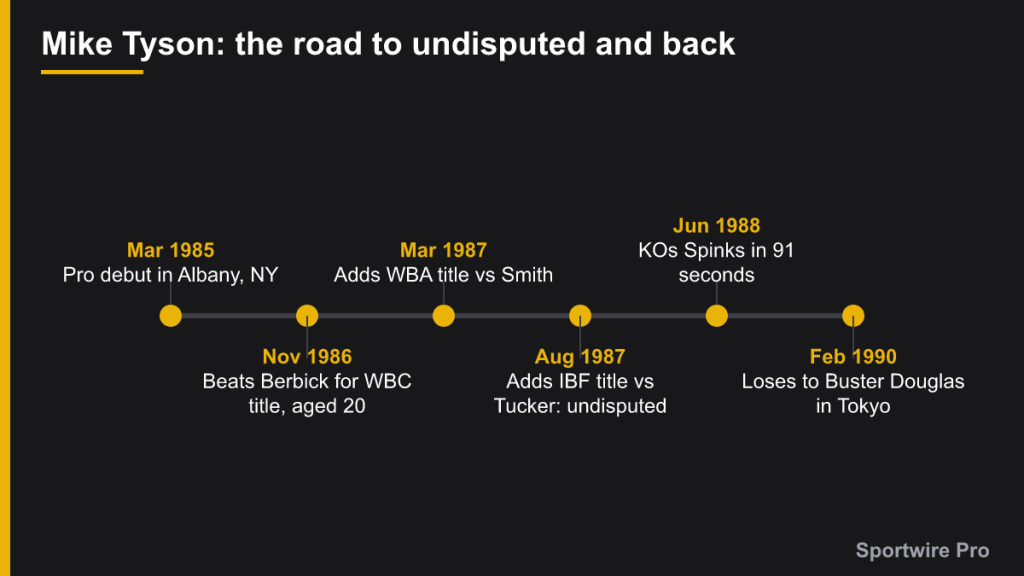
Tyson made his professional debut on March 6, 1985, in Albany, New York, stopping Hector Mercedes in the first round. He fought frequently, as many prospects of that era did, and built a long run of early knockouts that made him one of the most talked-about young fighters in boxing. The Ring named him its Prospect of the Year for 1985.
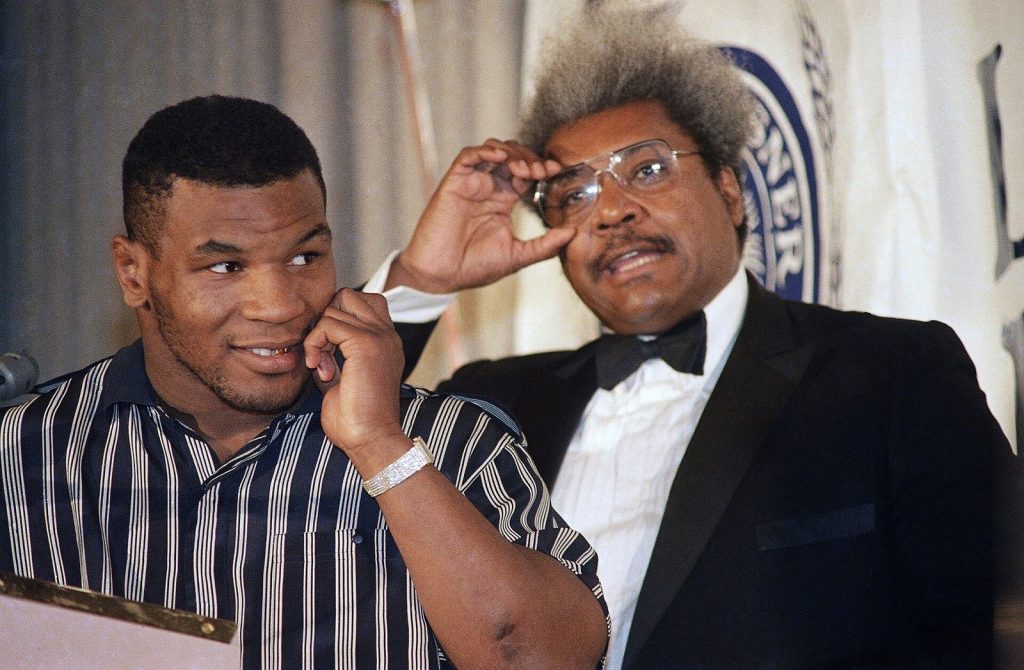
On November 22, 1986, at the Las Vegas Hilton, Tyson challenged Trevor Berbick for the WBC heavyweight title and stopped him in the second round. At 20 years and 4 months old, he became the youngest heavyweight champion in history, a record that still stood as of 2026.
Unification and the peak years
Tyson moved quickly to collect the other major belts. On March 7, 1987, in Las Vegas, he won the WBA title from James “Bonecrusher” Smith by unanimous decision. On August 1, 1987, he beat Tony Tucker, also by unanimous decision, to add the IBF title, holding the WBA, WBC and IBF belts at the same time. In the three-belt era, that made him the undisputed heavyweight champion. Our article on what undisputed champion means explains how the definition has changed over time.
The following year showed Tyson at his peak:
- January 22, 1988: he stopped former champion Larry Holmes in the fourth round in Atlantic City.
- March 21, 1988: he stopped Tony Tubbs in the second round in Tokyo.
- June 27, 1988: he knocked out Michael Spinks in 91 seconds, also winning The Ring’s heavyweight title and cementing his status as the lineal champion.
- February 25, 1989: he stopped Frank Bruno in the fifth round.
The Ring named him Fighter of the Year in 1986 and 1988. Behind the scenes, however, his team was changing. He fired Kevin Rooney in late 1988, and many observers have argued that his technical discipline, especially his head movement, declined in the years that followed.
Tokyo, 1990: the Buster Douglas upset
On February 11, 1990, at the Tokyo Dome, Tyson defended his titles against James “Buster” Douglas, who was given almost no chance by most observers. Douglas used his height and jab well, fought with confidence and survived a knockdown from a right uppercut in the final seconds of the eighth round, rising as the bell ended the round. In the tenth round, an uppercut followed by a flurry to the head put Tyson down for the first time in his professional career, and referee Octavio Meyran counted him out. Douglas took the WBA, WBC and IBF titles.
The result is still regularly ranked among the greatest upsets in boxing history. Tactically, it is often cited as a demonstration of what happens when a pressure fighter stops moving his head: Douglas was able to land his jab and right hand against a more stationary Tyson, and the aura of invincibility that had helped Tyson win fights before they began was gone.
Prison, comeback and the Holyfield fights
In February 1992, Tyson was convicted of rape and sentenced to six years in prison. He was released on parole in 1995 after serving about three years. He returned to the ring the same year, stopping Peter McNeeley in 89 seconds.
In 1996 he regained two titles: the WBC belt with a third-round knockout of Frank Bruno in March, and the WBA belt with a first-round knockout of Bruce Seldon in September. Then came two fights with Evander Holyfield:
- November 9, 1996: Holyfield stopped Tyson in the 11th round in Las Vegas, taking the WBA title in a performance that showed Holyfield’s toughness and inside fighting.
- June 28, 1997: in the rematch, Tyson was disqualified after the third round for biting Holyfield’s ears, one of the most infamous incidents in boxing history.
Tyson continued to fight into the 2000s and challenged Lennox Lewis for the heavyweight championship on June 8, 2002, in Memphis, losing by knockout in the eighth round. He lost to Danny Williams by fourth-round knockout in July 2004, and his last fight of that era came on June 11, 2005, when he retired on his stool against Kevin McBride before the seventh round.
The exhibition era and the Jake Paul fight
Tyson returned for an eight-round exhibition against Roy Jones Jr. on November 28, 2020, in Los Angeles, which was sanctioned by the California State Athletic Commission and ended in a split draw. On November 15, 2024, at AT&T Stadium in Arlington, Texas, he fought Jake Paul in a bout that the Texas Department of Licensing and Regulation sanctioned as a professional fight. Paul won by unanimous decision.
Counting that bout, Tyson’s professional record stands at 50 wins (44 by knockout), 7 losses and 2 no contests across 59 fights.
How Tyson’s legacy is viewed
Opinions on Tyson’s place in heavyweight history vary, and it is worth separating the arguments.
The case for his greatness
- The peak: from 1986 to 1989 he combined speed, power, defense and intimidation in a way few heavyweights ever have.
- The record: youngest heavyweight champion, unified champion of his era, and a long list of early knockouts.
- Influence: his success made the peek-a-boo style famous worldwide, and his fights remain a reference point for trainers teaching pressure fighting and head movement.
- Recognition: he was inducted into the International Boxing Hall of Fame in 2011.
The case against ranking him at the very top
- Quality of opposition: critics argue that the heavyweight division of the late 1980s was relatively weak, and that he did not beat many great opponents at their best.
- Losses to elite rivals: he lost both fights with Holyfield and lost to Lewis, the best heavyweights he faced after his peak.
- Short prime: his best years were brief compared with the long reigns of some other champions.
Most analysts agree on at least one point: at his best, Tyson was one of the most exciting and dangerous heavyweights who ever lived. Debates about all-time greatness are subjective, but Tyson is almost always part of the conversation about the most fearsome punchers.
What fighters still learn from Tyson
Coaches use Tyson’s fights to teach several lessons that apply far beyond heavyweight boxing:
- Height is not destiny: a shorter fighter can neutralize reach with head movement, timing and explosive entries.
- Defense creates offense: Tyson’s slips and rolls put him in position to throw his best punches.
- Body work pays: his combinations moved between the head and body, opening up both.
- Fundamentals fade without discipline: the contrast between his early fights and the Douglas fight is a reminder that style depends on maintained habits.
Those lessons are why Tyson’s best fights continue to be studied, decades after he first won the title.