The Muay Thai Clinch Explained: Plum, Knees and Off-Balancing
How the Muay Thai clinch works: the plum, collar ties, underhooks, knees and off-balancing, why it scores, and how kickboxing rules limit it.
Most striking sports treat the clinch as a pause. In boxing the referee waits a moment and then calls “break.” In most kickboxing rule sets the fighters are separated almost as soon as they grab each other. Muay Thai is different. In the Thai art the clinch is a place where fights are won: fighters fight for head and arm position, throw knees from short range, and try to tip each other over. A fighter who cannot handle the clinch in Muay Thai is missing a whole range of the sport.
This guide explains what happens when two Muay Thai fighters lock up: the main grips, the knee strikes that come from them, the off-balancing techniques that judges reward, and why other rule sets restrict all of it. It is an explanation, not a training manual. Clinch work involves strikes to the head and body and falls onto the canvas, and it should only be practiced under a qualified coach with suitable training partners.
What the clinch is and why Muay Thai keeps it
A clinch is any position where the fighters are tied together at close range, holding the head, neck, arms or body instead of striking from distance. The International Federation of Muaythai Associations (IFMA) describes clinching as an integral part of Muay Thai that lets fighters control opponents and land knee and elbow strikes. The Thai term usually given for clinch fighting is chap kho, which refers to grabbing the neck.
The key rule difference is simple: in Muay Thai the referee does not separate fighters just because they are holding each other. As long as there is activity, such as knees, off-balancing attempts or fighting for position, the clinch is allowed to continue. Referees step in when the action stalls, when a fighter is tied up in the ropes, or when the clinch turns into illegal wrestling.
That freedom changes everything about the sport. Because a fighter can be grabbed and kneed, the long-range kicking game, the punching game and the close-range clinch game all connect. A puncher who walks forward carelessly may find his head pulled down into a knee. If you are new to the differences between the two sports, our comparison of kickboxing and Muay Thai covers the wider rule picture.
The main clinch positions
Clinch fighting is a battle for grips. Whoever holds the better position can strike and off-balance, while the other fighter is forced to defend. The common positions include the following.
The plum (double collar tie)
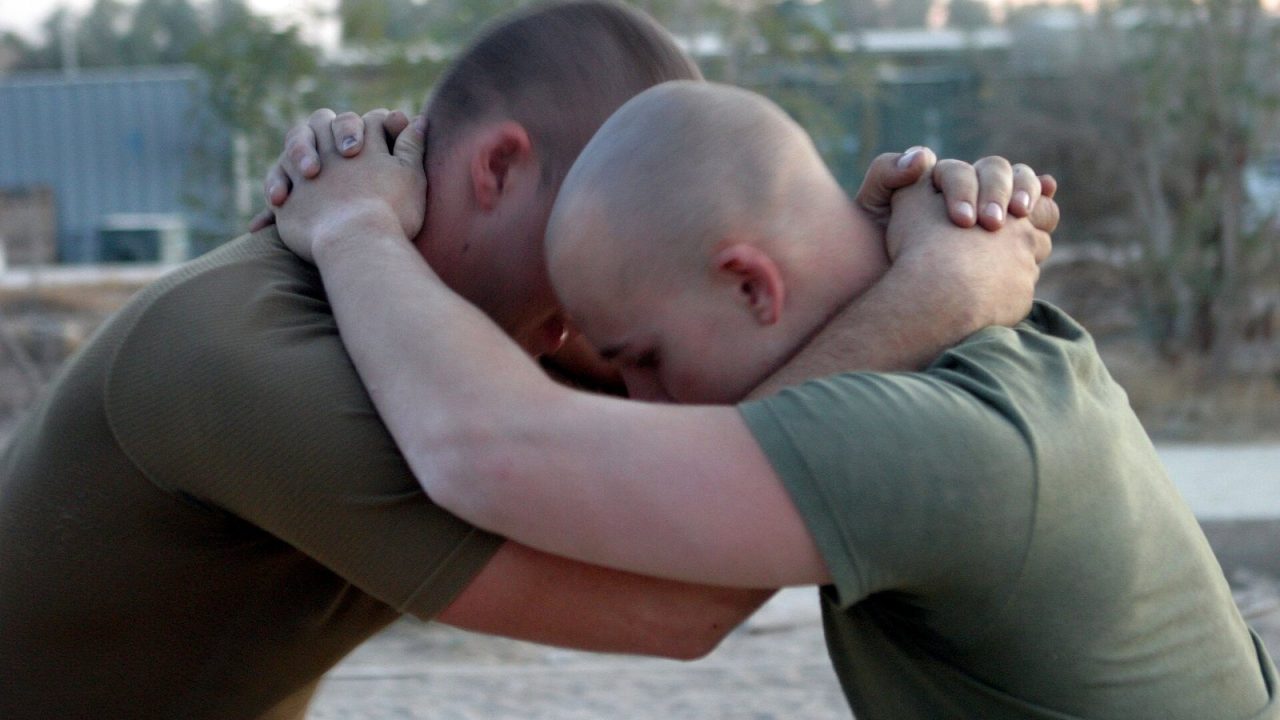
The best-known Muay Thai clinch is the double collar tie, often called the “plum” by English-speaking coaches. The fighter places both hands behind the opponent’s head, one palm over the back of the other hand, with the fingers not interlocked. The hands sit on the back of the head rather than low on the neck, and the forearms and elbows squeeze inward against the sides of the opponent’s neck and collarbones.
Holding the plum lets a fighter pull the opponent’s head down and posture forward, which opens the face and body for knees. The forearms also act as a barrier: if they are tight, the opponent cannot easily bring his own arms inside to break the grip. Fighters on the receiving end try to keep their posture upright, push the attacker’s head or chin back, and get their own arms inside.
Single collar tie and arm control
A single collar tie uses one hand behind the head while the other hand controls an arm, usually at the biceps or wrist. It is less dominant than the full plum but more flexible. It lets a fighter steer the opponent, throw short elbows or punches with the free hand in rule sets that allow them, or transition into a full double collar tie.
Underhooks and body control
An underhook means one arm slides under the opponent’s armpit and around the back. Double underhooks, with both arms under the opponent’s arms, give strong control of the body and hips. In Muay Thai, underhooks are useful for turning an opponent, pinning him against the ropes or setting up a dump. The opponent will often try to “pummel,” which means swimming his own arms back inside to regain underhooks.
Coaches also teach arm clinches, side clinches and low clinches around the body. Every grip is a trade-off between control and the ability to strike.
Knee strikes from the clinch
Knees are the main reason the clinch matters. IFMA rules allow knee strikes to the body, legs and head, both at close range and while clinching. From a strong grip, a fighter can throw repeated knees to the midsection, which drain energy and can stop a fight, or to the head if the opponent’s posture is broken down.
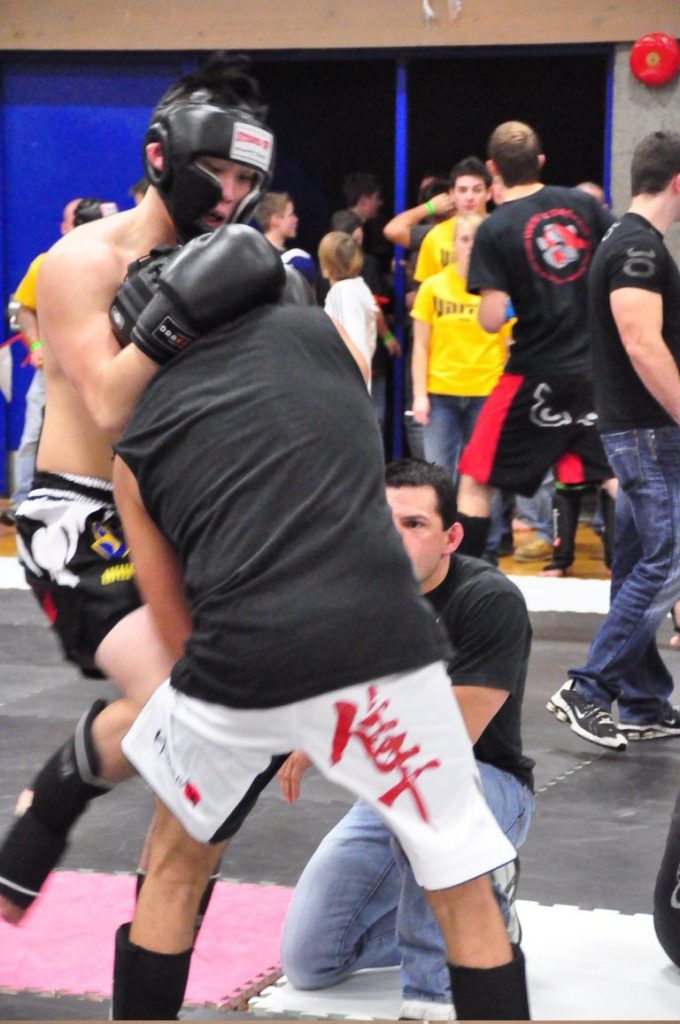
Traditional Muay Thai teaching names many knee variations. Among them:
- Straight knee (khao trong): driven forward rather than upward, usually into the body. It only rises toward the head when the opponent’s head is held down.
- Diagonal knee (khao chiang): comes in at an angle, often to the side of the body or the ribs.
- Curving knee (khao khong): swings around into the side of the body.
- Horizontal knee (khao tat): a sideways knee thrown at close range.
- Flying knee (khao loi): a jumping knee usually thrown from outside the clinch.
In the clinch the most important skill is often not the knee itself but making room for it. A fighter turns the opponent, steps the hips back, and throws the knee as the opponent is moving. Good clinchers mix knees with short steps and turns, so the opponent is always reacting. Knees to the thighs and legs also wear an opponent down.
Off-balancing: sweeps, dumps and turns
The second weapon in the Thai clinch is balance. Muay Thai rules allow sweeps and certain throws, but they do not allow wrestling-style takedowns or judo throws. In practice this means a fighter can turn, trip or tip an opponent to the canvas using the clinch, as long as the technique fits the sport’s accepted methods and the attacker does not drive in like a wrestler.
Typical off-balancing actions include:
- Turning: pulling one side of the head or body while stepping, so the opponent spins and loses position. A turn often creates the angle for a knee.
- Dumping: using an underhook or head control to tip the opponent over, often while blocking or lifting a leg, so he falls to the canvas.
- Sweeps: knocking the supporting leg out, often after catching a kick. A caught kick can lead to a sweep or a counter strike to the leg the opponent is standing on.
Off-balancing matters because Thai scoring rewards composure and control. A fighter who is repeatedly turned and dumped looks second best, even if he is not hurt. IFMA’s judging criteria mention technique and style, including balance and proper form. Thai judges and audiences have traditionally valued balance and dominance of position, so a clean dump can be as persuasive as a hard strike. Our guide on how Muay Thai is scored explains how knees, kicks and balance are weighed.
Defending and escaping the clinch
Defending in the clinch is a fight in its own right. Coaches typically teach several principles.
- Posture: keep the head up and the hips under the body. A fighter whose head is pulled down is open to knees.
- Inside position: fight to get the arms inside the opponent’s arms. Inside arms give control; outside arms get trapped.
- Frames: a forearm across the opponent’s neck or collarbone, or a hand on the hip, creates space to stop knees.
- Counter-knees and counter-turns: rather than just holding on, a defender tries to land his own knees or turn the attacker.
- Escape: pushing the opponent’s head or chin back to break posture, or using an elbow in rule sets that allow it, can separate the fighters.
A common beginner mistake is reaching for the head with straight arms and then leaning in. That gives a stronger opponent an easy target for knees and a natural handle for dumps. Another is “hugging,” which wraps the arms around the opponent with no plan to strike or turn. Referees in Muay Thai will separate a clinch that has become inactive, so passive holding gains nothing.
How kickboxing rule sets restrict the clinch
Kickboxing rule sets usually limit the clinch heavily, which is why the same fighters can look very different under different rules. GLORY’s rulebook is a good example. It lists grabbing, clinching or holding for any reason as a foul, unless the fighter immediately attacks with a single legal knee strike. After that knee, the fighter must release the clinch. Elbow strikes, throws, sweeps and pushes meant to off-balance an opponent are also listed as fouls. GLORY even limits holding a caught leg to a single legal strike, with one step allowed.
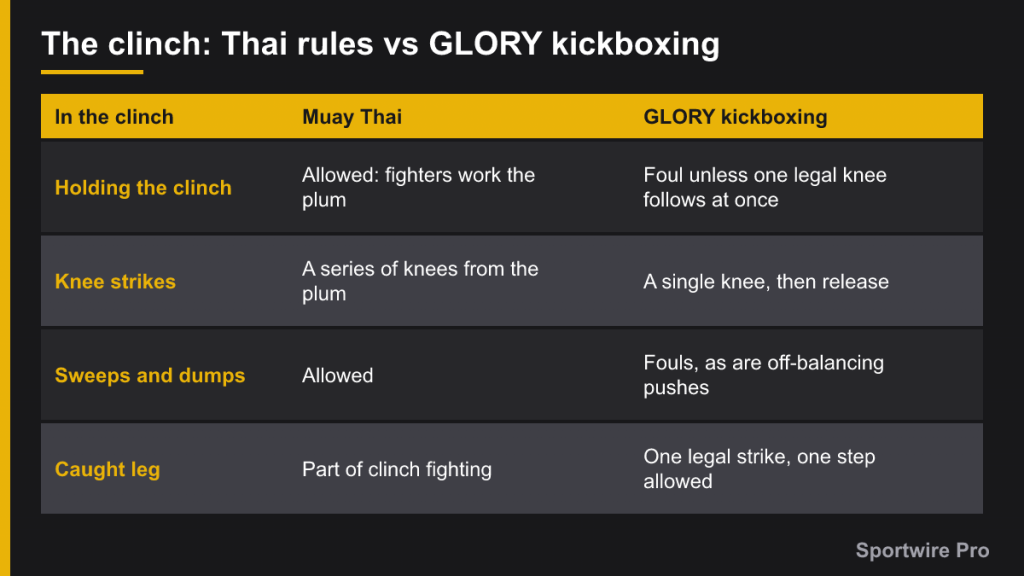
The effect is that a GLORY bout has very little clinch fighting compared with Thai rules. Fighters cannot hold the plum and throw a series of knees, and they cannot dump an opponent. The K-1 tradition of rules, which GLORY and many other promotions follow in broad strokes, similarly keeps the clinch short. You can read more about the details in our breakdown of GLORY kickboxing rules.
The difference matters for crossover athletes. A Thai fighter competing under kickboxing rules loses some of his best tools, while a kickboxer competing under Thai rules must suddenly defend knees and dumps from positions he has rarely trained. Amateur competition under IFMA allows the clinch, but rules and protective gear for amateurs differ from Thai professional stadium bouts, and athletes should check the event’s specific rules.
The clinch in MMA
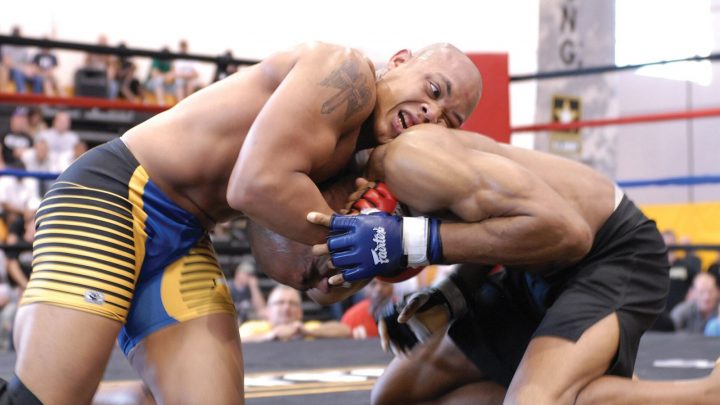
MMA borrowed the Thai plum early in its history, and knees from the double collar tie have ended many fights. However, the MMA clinch is not the same as the Thai clinch. In MMA, the clinch is also a wrestling position: a fighter who holds underhooks may go for a takedown, and the opponent must defend that as well as knees. Fighters also use the cage wall to pin an opponent. And under the Unified Rules of MMA, knees to the head of a grounded opponent are illegal, which adds a layer of rules that Muay Thai, where the action resets when someone falls, does not need.
Frequently asked questions
Do knees in the clinch score in Muay Thai?
Yes. Clean knees that land on legal targets are scoring techniques, and Thai judges often value knees and the control that sets them up. A fighter who dominates the clinch while landing knees will often win the round.
Can beginners learn the clinch safely?
Beginners usually start with grip fighting and positional drills at low intensity, with knees controlled or replaced by touches. A qualified coach will decide when it is appropriate to add strikes and off-balancing, and protective gear is commonly used.
Why the clinch defines Muay Thai
The clinch is where Muay Thai most clearly separates itself from other striking arts. It adds a grappling layer to a striking contest and rewards fighters who can control posture, balance and short-range knees. Understanding the plum, underhooks and off-balancing helps a viewer see why a fight that looks like “hugging” to a casual eye may in fact be the decisive battle. It also explains why so many rule sets, from GLORY to K-1-style events, deliberately limit clinch time: without it, the contest becomes a different sport.