The History of K-1: How Japan Built Kickboxing’s Biggest Stage
How Kazuyoshi Ishii's K-1 became kickboxing's biggest stage: the 1993 launch, the World Grand Prix, Tokyo Dome crowds, its great champions and its collapse.
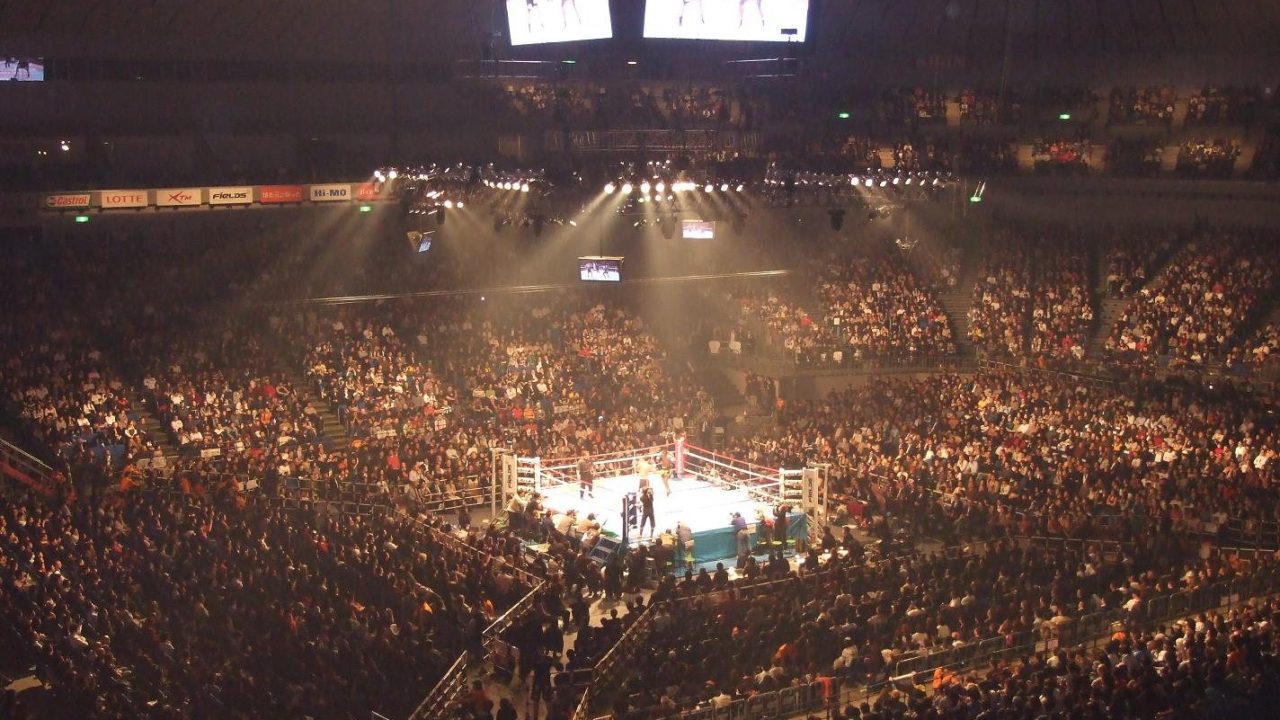
For roughly a decade and a half, the biggest kickboxing events in the world took place in Japan, under a two-character brand name: K-1. Its World Grand Prix filled the Tokyo Dome, drew huge television audiences and turned heavyweight kickboxers from the Netherlands, Switzerland, New Zealand and beyond into stars. Its rule set became so influential that “K-1 rules” is still the shorthand for a style of kickboxing used around the world.
This is the story of how K-1 started, how its tournament format worked, who its great champions were, why it collapsed and what it left behind.
The Founding: Kazuyoshi Ishii and the 1993 Launch
K-1 was founded in 1993 by Kazuyoshi Ishii, a former Kyokushin karate practitioner who had founded his own style, Seidokaikan karate, in 1980. Ishii’s idea was to bring together the best stand-up fighters from different striking arts, including karate, kickboxing and kung fu, under one rule set and in one ring.
The name reflects that. The “K” is officially explained as standing for karate, kickboxing and kung fu, and more broadly for kakutougi, the Japanese word for combat sports. The “1” is usually explained as referring to the single, open weight class of the early tournaments, or to the idea of one champion at the top.
K-1’s first event, K-1 Sanctuary I, took place on March 30, 1993, at Korakuen Hall in Tokyo, before about 2,100 spectators. A month later, on April 30, 1993, the first K-1 Grand Prix was held at Yoyogi National Gymnasium in front of around 12,000 people. Croatian fighter Branko Cikatić won the eight-man tournament and a $100,000 prize, beating Ernesto Hoost in the final.
The K-1 Rules
K-1’s rules were designed to produce aggressive, crowd-pleasing fights between strikers of different backgrounds:
- Allowed: punches, kicks (including low kicks to the legs), knees and sweeps.
- Not allowed: elbows, throws, headbutts and grabbing.
- Clinch: limited to about five seconds, so fighters can’t hold and stall.
- Rounds: three rounds of three minutes, with an extension round if the bout is drawn.
- Knockdowns: a fighter who stays down after the eight count is knocked out, and three knockdowns in a round end the bout, reduced to two in tournament bouts.
- Ring: a four-roped ring at least six meters square.
The combination was a deliberate middle ground. Knees and low kicks made it more complete than older American full-contact kickboxing, while the ban on elbows and the clinch limit kept it faster and more striking-focused than Muay Thai. Our comparison of kickboxing vs Muay Thai explains how those differences shape fighting styles.
The World Grand Prix Format
K-1’s centerpiece was the World Grand Prix, a season-long competition that ended with a one-night tournament.
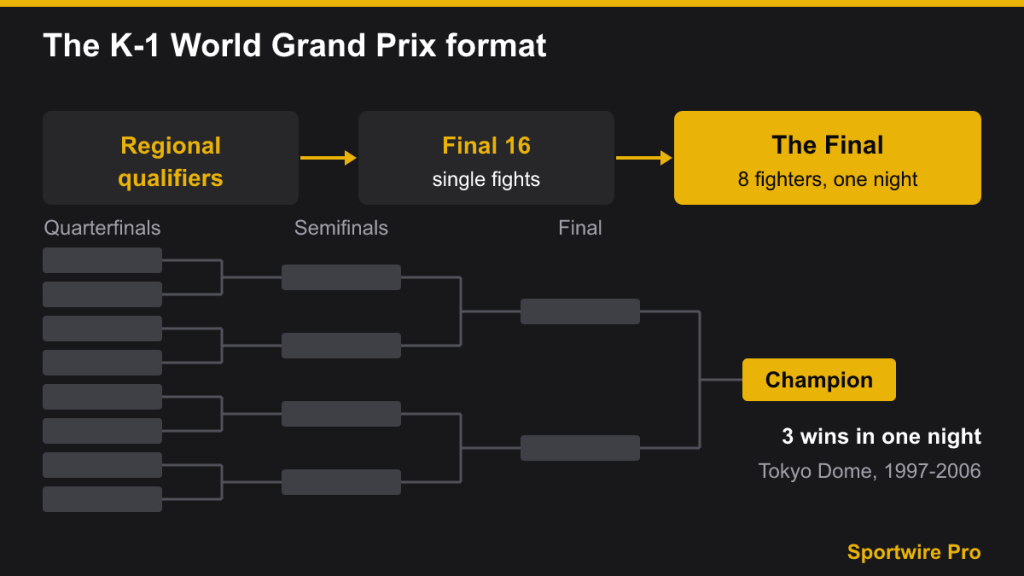
- Regional qualifiers: fighters earned places through elimination tournaments held in different regions.
- Final 16: a “Final 16” event of single fights decided the last eight places in the final.
- The Final: eight fighters competed in a single night, with quarterfinals, semifinals and a final. The champion had to win three fights in one evening.
The one-night format was the heart of K-1’s drama. A fighter who won a brutal quarterfinal might enter the semifinal bruised and limping; reserve bouts provided replacements when injured fighters couldn’t continue. Strategy mattered: winning early fights efficiently could decide the tournament as much as raw power.
From 1997 to 2006, the Final was held at the Tokyo Dome, one of Japan’s largest venues.
The Golden Era in Japan
From the late 1990s into the mid-2000s, K-1 was a mainstream phenomenon in Japan.
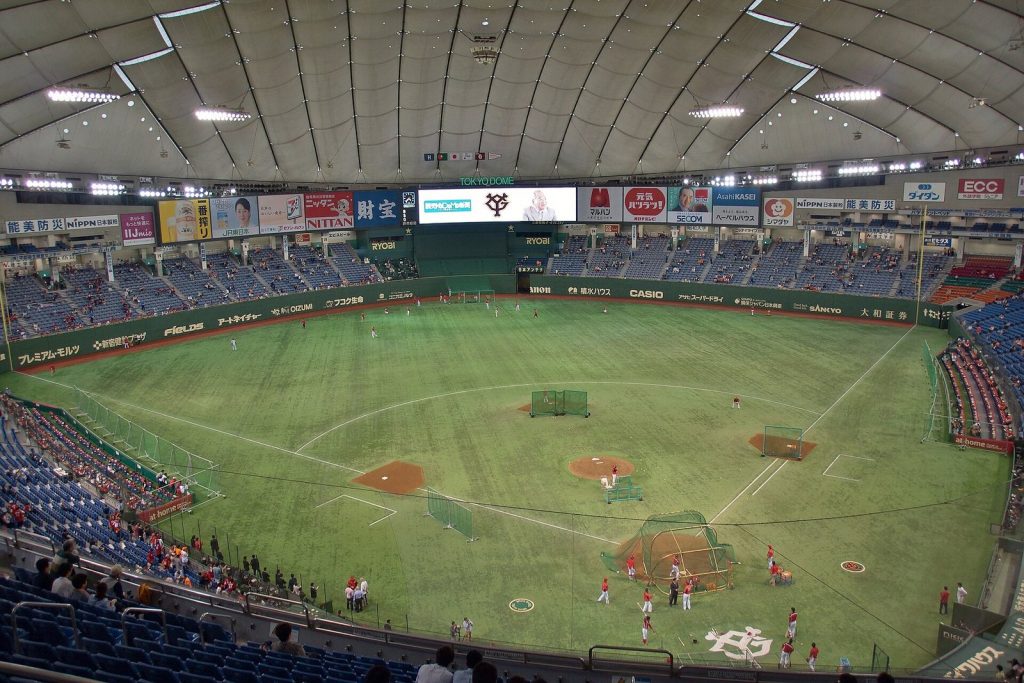
- Crowds: the 2000 World Grand Prix Final drew 70,200 spectators. The 2002 Final drew 74,500, the promotion’s highest recorded attendance, and the 2003 and 2004 Finals still drew more than 64,000 each.
- Television: the 2002 World Grand Prix Final recorded a 28.4 percent television rating in Japan.
- Crossover events: K-1 also moved into MMA. The first K-1 Premium Dynamite!!, co-promoted with PRIDE’s parent company Dream Stage Entertainment, drew 91,108 people, a record for MMA or kickboxing at the time.
- Lighter weights: in 2002, K-1 launched World MAX, a 70 kg tournament series that gave smaller kickboxers a stage of their own.
K-1’s success depended on characters as well as fights. Foreign heavyweights became celebrities in Japan, Japanese fighters such as Masaaki Satake and Musashi, both World Grand Prix finalists, gave home fans contenders of their own.
The Great Champions
The World Grand Prix produced a small group of dominant champions. The table lists the winners of the classic era, from 1993 to 2010.
| Year | Champion | Runner-up |
|---|---|---|
| 1993 | Branko Cikatić | Ernesto Hoost |
| 1994 | Peter Aerts | Masaaki Satake |
| 1995 | Peter Aerts | Jérôme Le Banner |
| 1996 | Andy Hug | Mike Bernardo |
| 1997 | Ernesto Hoost | Andy Hug |
| 1998 | Peter Aerts | Andy Hug |
| 1999 | Ernesto Hoost | Mirko Filipović |
| 2000 | Ernesto Hoost | Ray Sefo |
| 2001 | Mark Hunt | Francisco Filho |
| 2002 | Ernesto Hoost | Jérôme Le Banner |
| 2003 | Remy Bonjasky | Musashi |
| 2004 | Remy Bonjasky | Musashi |
| 2005 | Semmy Schilt | Glaube Feitosa |
| 2006 | Semmy Schilt | Peter Aerts |
| 2007 | Semmy Schilt | Peter Aerts |
| 2008 | Remy Bonjasky | Badr Hari |
| 2009 | Semmy Schilt | Badr Hari |
| 2010 | Alistair Overeem | Peter Aerts |
Ernesto Hoost
The Dutch kickboxer, nicknamed “Mr. Perfect,” won the World Grand Prix four times (1997, 1999, 2000 and 2002). He was runner-up in the very first tournament in 1993, and his long run at the top made him one of the defining figures of K-1’s golden era. Born in the Netherlands to Surinamese parents, he was known for speed, accuracy and counterpunching, with combinations of almost machine-like precision, and he used a signature low kick to wear opponents down over the course of a fight. For many fans he was the model of the technical Dutch style.
Peter Aerts
Another Dutchman, Aerts won three titles (1994, 1995 and 1998) and reached the final again in 2006, 2007 and 2010. His longevity, appearing in finals across nearly two decades, is unmatched in K-1 history.
Semmy Schilt
The towering Dutch fighter won four titles (2005, 2006, 2007 and 2009), including three in a row. Only Hoost matched his four tournament wins, and Schilt’s run in the second half of the 2000s made him the defining champion of K-1’s later years.
Remy Bonjasky and others
Remy Bonjasky won three titles (2003, 2004 and 2008). Andy Hug of Switzerland won in 1996 and was runner-up in both 1997 and 1998. New Zealand’s Mark Hunt won in 2001, and Alistair Overeem won the 2010 tournament while also competing in MMA.
Counting Overeem, fighters from the Netherlands won 15 of the 18 World Grand Prix titles from 1993 to 2010, cementing the country’s reputation as the center of heavyweight kickboxing. The only exceptions were Cikatić of Croatia in 1993, Hug of Switzerland in 1996 and Hunt of New Zealand in 2001.
Reading the champions table
A few patterns stand out. Peter Aerts appears as champion or runner-up in six finals spread across 1994 to 2010. Andy Hug reached three consecutive finals from 1996 to 1998, winning one. Japanese fighters reached the final three times, Masaaki Satake in 1994 and Musashi in 2003 and 2004, but no Japanese fighter won the heavyweight Grand Prix in that period.
The Collapse
K-1’s decline came from the business side.
- 2003: Ishii was arrested for tax evasion and later convicted. Sadaharu Tanikawa formed the Fighting and Entertainment Group (FEG) in September 2003 to run K-1.
- 2010–2011: financial problems surfaced. FEG announced a restructuring in early 2011, and fighters reported unpaid purses.
- July 28, 2011: the K-1 brand and most of its trademarks were sold to Barbizon Corporation Limited.
- 2012: EMCOM Entertainment bought K-1 from Barbizon on February 1, 2012, and K-1 Global Holdings was established in Hong Kong in March. FEG ceased operations and went bankrupt that year.
The brand survived through several owners and revivals. In February 2023, M-1 Sports Media acquired the global licensing rights to the K-1 brand, and a World Grand Prix was held again in 2024, won by Ariel Machado. But the era of 70,000-strong crowds at the Tokyo Dome had passed.
K-1’s Legacy
The rule set
K-1’s biggest legacy is its rules. Punches, kicks and knees with a limited clinch and no elbows became the global template for professional kickboxing. When a modern promotion advertises “K-1 rules,” fans know what to expect.
GLORY is the clearest example of that inheritance. When K-1 hit severe financial trouble in 2011, the group behind GLORY tried to buy the brand. After K-1 went to EMCOM instead, they launched a new promotion in 2012, acquiring the It’s Showtime, Golden Glory and United Glory organizations and signing many top heavyweights, among them Peter Aerts, Remy Bonjasky and Semmy Schilt. GLORY’s rule set, covered in our guide to GLORY’s rules, follows the same punches-kicks-knees, limited-clinch formula.
Global talent pipeline
K-1 made kickboxing a viable career for fighters around the world and established the Dutch gyms as the sport’s powerhouse. It also showed that elite stand-up fighters could become stars on a scale previously reserved for boxers.
Crossover with MMA
Several K-1 fighters, including Mark Hunt, Mirko Filipović and Alistair Overeem, also became prominent in MMA, and K-1’s co-promotions with PRIDE’s parent company, Dream Stage Entertainment, produced some of the biggest crowds in combat sports history. The story of Japanese MMA in that era is closely tied to K-1’s.