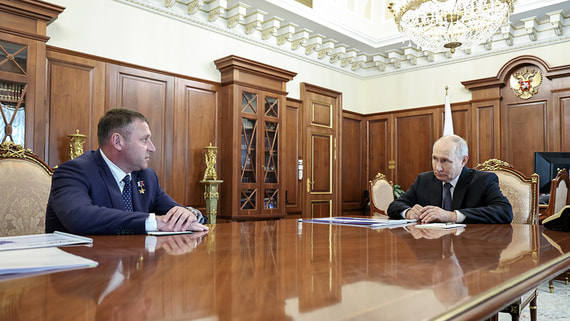
Russian President Vladimir Putin recently held a working meeting with Alexander Shuvaev, who has been serving as the acting governor of Belgorod Oblast for nearly three months. The meeting, which took place at the Kremlin, covered a wide range of issues facing this strategically important border region that has found itself at the center of significant security challenges since the beginning of the conflict in Ukraine. Shuvaev replaced Vyacheslav Gladkov, who had led the region during some of its most turbulent recent years.
The Belgorod region, which shares a lengthy border with Ukraine, has experienced unprecedented pressures over the past two years. The oblast has faced regular cross-border incidents, drone attacks, and shelling that have affected civilian infrastructure and daily life for residents. These circumstances have made the governorship of Belgorod one of the most challenging administrative positions in all of Russia, requiring not only standard administrative competence but also crisis management skills and close coordination with federal security services.
Background on the Leadership Transition
Alexander Shuvaev’s appointment as acting governor came as part of a broader reshuffling of regional leadership across Russia. Before taking on this role, Shuvaev had accumulated significant experience in public administration and had demonstrated capabilities that Moscow deemed suitable for managing a region under such extraordinary circumstances. His predecessor, Vyacheslav Gladkov, had served during the initial and most intense phase of the border tensions, often appearing in media reports discussing evacuation procedures, infrastructure damage, and coordination with military authorities.
During the meeting with Putin, discussions reportedly centered on several key areas: the security situation along the border, the economic development of the region despite ongoing challenges, social support for affected residents, and infrastructure reconstruction efforts. Putin has consistently emphasized the importance of maintaining normal life for residents in border regions while ensuring their safety, a delicate balance that regional governors must navigate daily.
Economic and Social Challenges
The Belgorod Oblast faces unique economic challenges stemming from its geographic position. Traditionally an agricultural powerhouse known for its grain production and food processing industries, the region has had to adapt its economic strategy to current realities. Many businesses have had to implement additional security measures, and some agricultural activities in areas closest to the border have been restricted or modified. The federal government has allocated significant resources to support affected businesses and maintain employment levels in the region.
Social support programs have become a critical component of regional governance in Belgorod. Thousands of residents from border areas have been temporarily or permanently relocated to safer locations, requiring housing assistance, job placement services, and psychological support. The regional administration has established various compensation programs for property damage and has worked to ensure that children can continue their education despite disruptions. Healthcare services have also been reinforced, with additional medical facilities and personnel deployed to handle both routine care and emergency situations.
Strategic Importance and Federal Support
The Kremlin has repeatedly signaled its commitment to supporting Belgorod and other border regions through this difficult period. Federal funding has been directed toward strengthening civil defense infrastructure, including the construction of shelters and early warning systems. Additionally, investment in transportation infrastructure continues, ensuring that the region maintains connectivity with the rest of Russia even as certain routes near the border have become less viable.
Looking ahead, Shuvaev faces the considerable task of not only managing current challenges but also planning for the region’s long-term development. This includes attracting investment despite the security situation, maintaining population levels as some residents choose to relocate to other parts of Russia, and preparing reconstruction plans for when conditions allow. The meeting with Putin likely included discussions of specific federal support mechanisms and timelines for various development projects that will shape Belgorod’s future.
Expert Opinion: The appointment of experienced administrators to Russia’s border regions reflects Moscow’s recognition that these areas require exceptional governance capabilities during the current period. Shuvaev’s ability to balance security imperatives with economic development and social welfare will be closely watched as a model for other regions facing similar challenges. The coming months will be critical in determining whether the region can stabilize and begin meaningful reconstruction efforts.