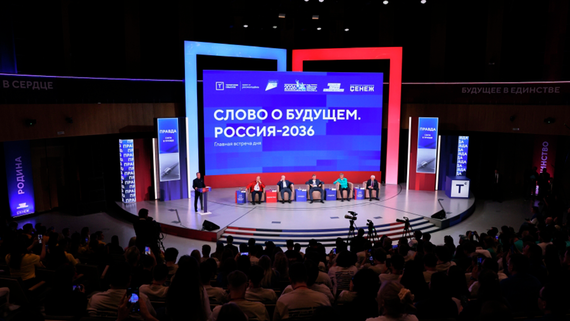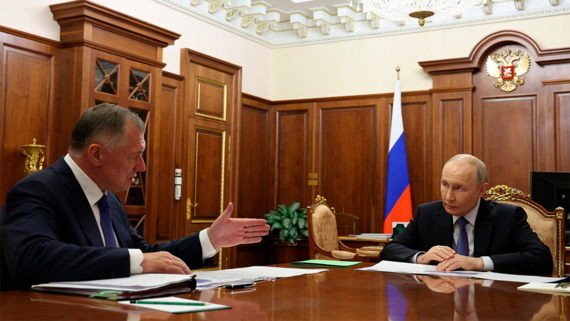
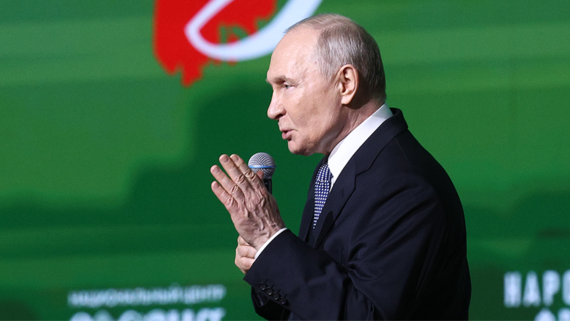
Russian President Vladimir Putin has extended his congratulations to the All-Russia People’s Front (ONF) on the occasion of its 15th anniversary. During his address, the president highlighted the organization’s significant role in monitoring government activities and ensuring accountability, noting that the ONF currently oversees 552 of his presidential directives. This milestone celebration marks a decade and a half of the organization’s involvement in Russian civic and political life, serving as a bridge between citizens and the state apparatus.
The Origins and Evolution of the All-Russia People’s Front
The All-Russia People’s Front was established in May 2011 at the initiative of Vladimir Putin, who was serving as Prime Minister at the time. The organization was created as a broad coalition designed to unite various civic groups, trade unions, youth organizations, and women’s associations under a common platform. The founding concept aimed to create a mechanism for direct citizen participation in governance and policy-making, bypassing traditional bureaucratic channels. Initially formed ahead of the 2011 parliamentary elections, the ONF was intended to bring fresh perspectives and non-partisan voices into the political discourse.
Over the years, the organization has undergone significant transformation. In 2013, following Putin’s return to the presidency, the ONF was restructured into an independent social movement with expanded functions. Its primary mission evolved to include monitoring the implementation of presidential decrees, combating corruption at various government levels, and addressing citizen complaints about bureaucratic inefficiency. The organization established regional branches across all of Russia’s federal subjects, creating a nationwide network of activists and volunteers dedicated to civic oversight.
Current Activities and Oversight Functions
The revelation that 552 presidential directives are currently under ONF supervision underscores the organization’s substantial role in the Russian governance structure. These directives cover a wide range of areas, including healthcare reform, education policy, infrastructure development, and social welfare programs. The ONF’s monitoring activities involve tracking the progress of government initiatives, identifying obstacles to implementation, and reporting directly to the presidential administration when issues arise. This oversight function has positioned the organization as a crucial feedback mechanism in Russia’s vertical power structure.
The organization employs various methods to fulfill its watchdog role, including public hearings, citizen hotlines, and investigative journalism through its media projects. ONF activists regularly conduct inspections of government facilities, monitor public procurement processes, and investigate citizen complaints about local authorities. The organization has been credited with identifying cases of corruption, wasteful spending, and bureaucratic negligence across different regions of Russia. Its reports have occasionally led to dismissals of officials and policy corrections at both federal and regional levels.
Political Significance and Public Perception
The 15th anniversary of the ONF comes at a particularly significant time in Russian politics, as the country continues to navigate complex domestic and international challenges. Political analysts note that organizations like the ONF serve multiple functions within the Russian political system. They provide a channel for citizen engagement that operates parallel to traditional party structures, while also serving as an instrument for the presidential administration to maintain oversight of regional authorities and federal agencies. Critics argue that the organization primarily serves to legitimize existing power structures, while supporters contend that it provides genuine opportunities for civic participation and government accountability.
The organization’s membership has grown substantially since its founding, with millions of Russians reportedly participating in its various programs and initiatives. The ONF has launched numerous projects addressing issues such as road safety, environmental protection, healthcare accessibility, and support for families with children. During recent years, the organization has also been actively involved in humanitarian efforts and support programs related to Russia’s ongoing military operations. As the ONF enters its sixteenth year of operation, its role in Russian civic life continues to evolve in response to changing political circumstances and societal needs, remaining a significant element in the relationship between Russian citizens and their government.
Expert Opinion: The ONF’s 15-year trajectory reflects the broader evolution of civil society mechanisms in Russia, where state-affiliated organizations have increasingly assumed roles traditionally held by independent NGOs. The substantial number of presidential directives under ONF oversight suggests the organization has become institutionally embedded in Russia’s governance framework, functioning as both a legitimizing force for executive decisions and a pressure valve for citizen grievances. Moving forward, the organization’s effectiveness will likely be measured by its ability to maintain credibility among ordinary citizens while navigating the complex dynamics of Russia’s political landscape.