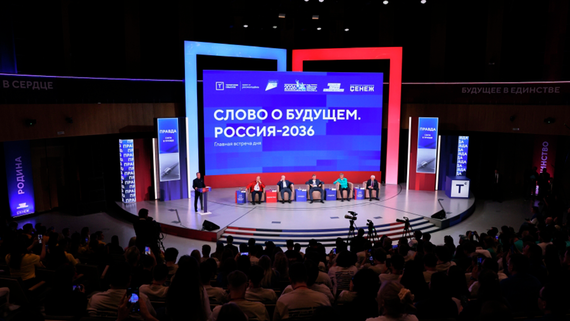
Leaders of the major factions in Russia’s State Duma addressed participants at the prestigious ‘Territory of Meanings’ forum, presenting their visions for the country’s most pressing issues that require attention over the coming five years. The annual gathering, which brings together young leaders, politicians, and public figures, served as a platform for substantive discussions about Russia’s future direction and the legislative priorities that will shape the nation’s development trajectory through 2030.
Key Points from the Forum
- State Duma faction leaders presented a five-year agenda focused on technological sovereignty, demographic recovery, and youth engagement at the annual Territory of Meanings forum.
- Economic priorities center on import substitution in microelectronics, software, and manufacturing, paired with support for small and medium-sized businesses.
- Demographic proposals include expanded family benefits, improved healthcare access, affordable housing programs, and incentives for settlement in smaller cities.
- Education reform aims to align university programs with labor market needs while strengthening vocational training and patriotic curriculum elements.
- The forum’s format reflects an intentional government strategy to cultivate political support among Russia’s next generation of leaders.
The forum, traditionally held as part of Russia’s broader youth policy initiatives, has become an important venue for direct dialogue between established political figures and the younger generation. This year’s discussions reflected the complex geopolitical and economic landscape facing Russia, with parliamentary leaders from across the political spectrum offering their perspectives on domestic and international challenges.
Pushing for Tech Independence and Economic Resilience
Among the key themes addressed by faction leaders was the imperative of achieving technological sovereignty and accelerating economic development despite external pressures. Representatives emphasized the need for substantial investment in domestic industries, particularly in high-technology sectors, manufacturing, and agricultural production. The discussions highlighted ongoing efforts to reduce dependency on foreign technologies and develop indigenous capabilities in critical areas such as microelectronics, software development, and advanced manufacturing equipment.
Parliamentary leaders stressed that economic resilience would require not only import substitution strategies but also the cultivation of a new generation of engineers, scientists, and entrepreneurs. The State Duma has been actively working on legislation to support small and medium-sized businesses, streamline regulatory frameworks, and create favorable conditions for innovation. Several speakers noted that the next five years would be crucial for establishing sustainable economic growth patterns that can withstand external shocks and sanctions pressure.
Tackling Population Decline and Housing Costs
Demographic concerns featured prominently in the discussions, with faction leaders acknowledging that Russia faces significant challenges in reversing population decline trends. The country’s demographic situation has been a persistent concern for policymakers, with birth rates remaining below replacement levels despite various government incentive programs. Leaders outlined proposals for expanding family support measures, improving healthcare accessibility, and creating conditions that encourage young families to have more children.
Housing affordability emerged as another critical issue, with deputies discussing the need for expanded mortgage programs and increased construction of affordable housing. The ‘Territory of Meanings’ participants heard proposals for regional development initiatives aimed at making smaller cities and rural areas more attractive for young professionals, thereby addressing both demographic distribution concerns and reducing pressure on major metropolitan centers.
Building Pipelines for Youth in Politics and Education
The forum itself represented a manifestation of the government’s commitment to engaging with younger citizens. Faction leaders emphasized the importance of creating pathways for youth participation in political and civic life, noting that the challenges of the coming decades would ultimately be addressed by today’s young people. Education reform discussions focused on aligning university curricula with labor market demands, strengthening vocational training programs, and preserving the quality of Russian higher education traditions while adapting to contemporary requirements.
Several speakers addressed the need for patriotic education and the preservation of historical memory, themes that have gained increased prominence in Russian public discourse. The discussions reflected broader debates about national identity, values transmission, and the role of educational institutions in shaping civic consciousness among younger generations.
The Legislative Roadmap Through 2030
As the forum concluded, parliamentary leaders reiterated their commitment to addressing the outlined challenges through comprehensive legislative action. The five-year timeframe mentioned by speakers coincides with the current parliamentary term, suggesting that the issues discussed will form the core of the State Duma’s legislative agenda. The ‘Territory of Meanings’ forum has established itself as an important annual event where political rhetoric meets practical policy discussions, providing young Russians with direct access to their elected representatives and the opportunity to influence the national conversation about the country’s future direction.
What These Priorities Signal for Russian Policy
The consistent messaging across Duma factions reveals a domestic agenda shaped heavily by external isolation. Technological sovereignty is no longer aspirational language—it reflects urgent necessity as sanctions restrict access to foreign components and expertise. The emphasis on homegrown microelectronics and software development acknowledges that import substitution has shifted from economic preference to strategic requirement.
Demographic challenges present a longer-term structural problem that incentive programs have so far failed to solve. Birth rates remain below replacement despite years of maternity capital payments and housing subsidies. The new proposals around regional development suggest policymakers recognize that Moscow-centric growth patterns contribute to demographic imbalances, though relocating young professionals to smaller cities requires more than rhetoric.
The youth forum format itself deserves attention. By bringing parliamentary leaders into direct dialogue with young people, the government is attempting to build legitimacy and loyalty among a generation that will inherit these policy outcomes. Whether this translates into genuine influence over legislative priorities or remains symbolic engagement will become clearer as the Duma’s actual voting record unfolds through 2030.
Common Questions
What is the Territory of Meanings forum in Russia?
It is an annual government-sponsored gathering that brings together young leaders, politicians, and public figures for discussions about national policy. The forum serves as a platform for direct dialogue between established political figures and younger generations, focusing on issues like economic development, demographics, and education reform.
What does technological sovereignty mean for Russia?
Technological sovereignty refers to Russia’s goal of reducing dependence on foreign technologies by developing domestic capabilities in critical sectors. This includes microelectronics manufacturing, software development, and advanced industrial equipment—areas where Western sanctions have created significant supply challenges.
How is Russia addressing its population decline?
Proposed measures include expanding family support programs, improving healthcare accessibility, increasing affordable housing construction, and creating incentives for young families to settle in smaller cities and rural areas rather than concentrating in major metropolitan centers.
Expert Opinion: The emphasis on five-year planning horizons by Duma faction leaders reflects a traditional Russian approach to strategic governance, now adapted to current realities of economic uncertainty and geopolitical tensions. The convergence of demographic, technological, and educational priorities across different political factions suggests these issues will likely receive bipartisan legislative support, though implementation effectiveness will depend heavily on sustained budgetary commitments and regional administrative capacity. The youth forum format itself indicates recognition that long-term policy success requires cultivating support among future leaders.