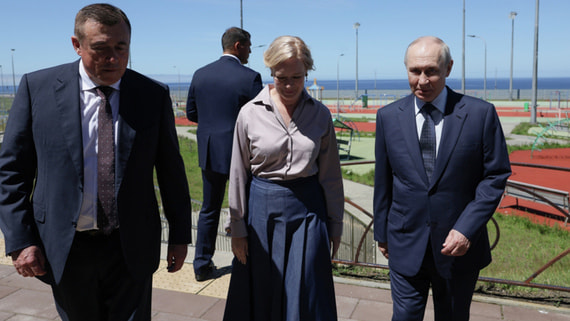
Russian President Vladimir Putin has made his first-ever visit to the Kuril Islands, a move that carries profound symbolic and geopolitical significance. The trip underscores Moscow’s firm stance on the disputed archipelago and effectively signals that hopes for stabilizing relations with Japan in the near future remain dim. This unprecedented presidential visit to the contested territory marks a definitive statement about Russian sovereignty over the islands, which Japan has claimed since the end of World War II.
The Kuril Islands dispute represents one of the longest-running territorial conflicts in modern history, preventing Russia and Japan from signing a formal peace treaty for nearly eight decades. The four southernmost islands—known as the Northern Territories in Japan and the Southern Kurils in Russia—were seized by Soviet forces in the final days of World War II in 1945. Japan considers this occupation illegal and has consistently demanded their return as a precondition for normalizing relations fully with Moscow.
Historical Context of the Territorial Dispute
The roots of the Kuril Islands controversy trace back to the Yalta Conference of 1945, where Allied leaders agreed that the Soviet Union would receive the islands in exchange for entering the war against Japan. Following Japan’s surrender, Soviet troops occupied the entire Kuril chain, displacing approximately 17,000 Japanese residents. Since then, successive Japanese governments have maintained their claim to the islands, which hold significant strategic value due to their position controlling access between the Sea of Okhotsk and the Pacific Ocean.
For decades, diplomatic efforts to resolve the dispute have repeatedly stalled. The closest the two nations came to a breakthrough was during the 1990s and early 2000s, when various proposals for joint economic development and phased handover arrangements were discussed. Former Prime Minister Shinzo Abe invested considerable political capital in cultivating a personal relationship with Putin, meeting him more than two dozen times in hopes of achieving a diplomatic breakthrough. However, these efforts ultimately proved fruitless.
Strategic and Military Implications
Putin’s visit comes at a time when Russia has been significantly bolstering its military presence on the disputed islands. In recent years, Moscow has deployed advanced anti-ship missile systems, radar installations, and modernized military infrastructure across the Kurils. The islands provide Russia with crucial naval advantages, including ice-free access to the Pacific and control over vital sea lanes. Military analysts suggest that the fortification of these positions has effectively eliminated any realistic possibility of territorial compromise in the foreseeable future.
The timing of the presidential visit is particularly noteworthy given the current state of international relations. Following Russia’s invasion of Ukraine in 2022, Japan aligned firmly with Western sanctions against Moscow, freezing assets and restricting trade. Russia responded by suspending peace treaty negotiations and designating Japan as an “unfriendly” nation. The visit to the Kurils can be interpreted as a direct message that Moscow views any prospect of territorial concessions as completely off the table under current circumstances.
Economic Interests and Regional Development
Beyond military considerations, the Kuril Islands hold substantial economic potential. The surrounding waters are among the richest fishing grounds in the world, supporting lucrative catches of salmon, crab, and pollock. Additionally, the region is believed to contain significant deposits of oil, natural gas, and rare earth minerals. Russia has been actively promoting development programs for the islands, including tax incentives and infrastructure investments designed to attract settlers and businesses to this remote Far Eastern territory.
For Japan, the loss of hope for recovering the islands represents more than just a diplomatic setback. Many elderly Japanese citizens who were displaced from the islands or their descendants continue to advocate for their return, making it an emotionally charged domestic political issue. Annual commemorations and advocacy groups keep the territorial claim alive in Japanese public consciousness, ensuring that any government perceived as abandoning the claim would face significant political backlash.
Expert Opinion: Putin’s unprecedented Kuril Islands visit effectively closes the door on territorial negotiations for the foreseeable future, signaling that Russia views the dispute as settled regardless of international pressure. This move reflects Moscow’s broader strategy of demonstrating resolve on sovereignty issues while relations with Western-aligned nations remain frozen. Any meaningful diplomatic progress will likely require a fundamental shift in the geopolitical landscape, potentially taking decades to materialize.