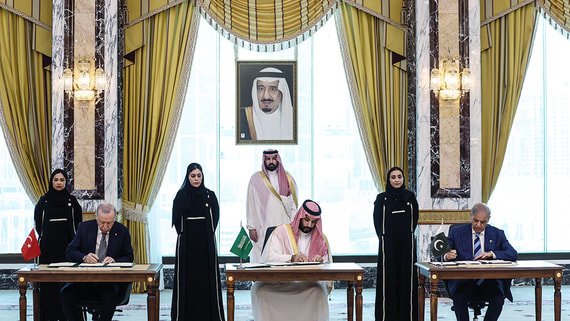
A potential new geopolitical bloc involving Turkey, Saudi Arabia, and Pakistan is gaining momentum, with discussions suggesting these three nations may be laying the groundwork for a military and strategic alliance that some analysts are already calling a “NATO of the East.” The initiative, which has been discussed at various diplomatic levels over recent months, could fundamentally reshape the balance of power across the Middle East, Central Asia, and beyond. Participants in this emerging coalition are reportedly looking to expand membership to include additional countries, potentially creating a formidable counterweight to existing Western-dominated security structures.
The concept of an Eastern military alliance is not entirely new, but the current geopolitical climate has created unprecedented conditions for such cooperation. All three founding nations share certain strategic concerns, including regional security threats, the desire for greater autonomy from Western influence, and economic interests that increasingly align. Turkey, a NATO member since 1952, has grown increasingly frustrated with what Ankara perceives as insufficient support from its Western allies, particularly regarding Kurdish militant groups and the country’s exclusion from the F-35 fighter jet program following its purchase of Russian S-400 missile defense systems.
Strategic Interests and Regional Dynamics
Saudi Arabia brings enormous financial resources and religious significance as the custodian of Islam’s two holiest sites to any potential alliance. The Kingdom has been actively seeking to diversify its security partnerships beyond its traditional reliance on the United States, especially following perceived American reluctance to respond forcefully to attacks on Saudi oil facilities in 2019. Crown Prince Mohammed bin Salman has been pursuing an ambitious modernization agenda that includes developing domestic defense capabilities and establishing Saudi Arabia as a regional power center independent of Western patronage.
Pakistan contributes nuclear capability and one of the world’s largest standing armies to this potential coalition. The South Asian nation has historically maintained close ties with both Saudi Arabia, which has provided financial assistance during economic crises, and Turkey, with which it shares cultural and historical connections dating back to the Ottoman era. Pakistan’s military expertise, battle-tested through decades of counterinsurgency operations and conventional military planning, represents a significant asset for any regional security arrangement.
Expansion Plans and Potential Members
According to various reports, the founding members are actively seeking to expand the bloc’s membership. Potential candidates include Azerbaijan, which has grown closer to Turkey following the 2020 Nagorno-Karabakh conflict, as well as several Central Asian republics and possibly Malaysia or Indonesia from Southeast Asia. The inclusion of additional Muslim-majority nations could transform this initiative into a broader Islamic military alliance, though organizers appear careful to frame it in strategic rather than religious terms to avoid alienating potential partners and provoking international concern.
Western analysts and policymakers are watching these developments with considerable interest and some concern. The emergence of a cohesive military bloc outside traditional Western alliance structures could complicate diplomatic efforts in multiple regional conflicts, from Syria to Afghanistan to the ongoing tensions in the Persian Gulf. Some experts argue that such an alliance could actually contribute to regional stability by providing a unified framework for addressing security challenges, while others worry about the potential for increased militarization and the creation of new fault lines in global politics.
Challenges and Future Prospects
Despite the apparent momentum, significant obstacles remain before any formal alliance could be established. Historical rivalries, divergent foreign policy priorities, and the complex web of existing bilateral and multilateral commitments could all complicate negotiations. Turkey’s NATO membership creates particular complications, as the alliance’s charter includes provisions regarding members’ external security arrangements. Additionally, each potential member faces domestic political considerations that could influence their willingness to commit to binding security guarantees.
The economic dimension of this potential partnership should not be underestimated. Beyond military cooperation, discussions have reportedly included proposals for expanded trade agreements, joint infrastructure projects, and coordinated energy policies. Saudi Arabia’s vast oil wealth, Turkey’s manufacturing capacity and strategic location as a bridge between Europe and Asia, and Pakistan’s large and youthful workforce could create significant economic synergies. Whether these ambitious plans translate into concrete action will depend on the political will of all parties and the evolving international environment in which they operate.
Expert Opinion: The formation of a Turkey-Saudi Arabia-Pakistan alliance represents a significant shift toward multipolarity in global security architecture. While full implementation faces substantial hurdles, even partial success would signal the declining monopoly of Western-led institutions in managing regional security affairs. The coming two to three years will be critical in determining whether this initiative evolves into a formal treaty organization or remains an informal coordination mechanism.