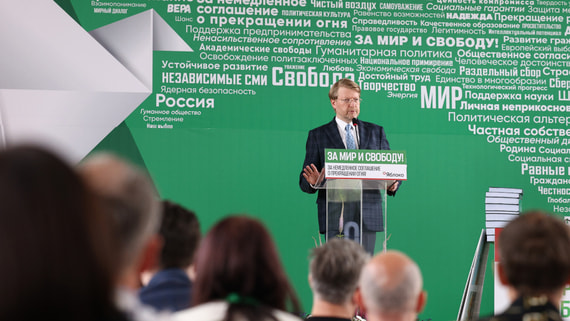
In a significant development for Russian electoral politics, the Supreme Court has ruled to remove the Yabloko party from participation in the upcoming State Duma elections. This decision, if upheld on appeal, would reduce the number of parties appearing on the ballot to just ten, marking another chapter in the long-running tensions between opposition forces and the Russian political establishment. The ruling has sparked discussions about the state of political pluralism in the country and the challenges faced by liberal opposition parties attempting to participate in the democratic process.
Background of the Yabloko Party
Yabloko, whose name means “Apple” in Russian, has been one of the most prominent liberal democratic parties in Russia since its founding in 1993. The party was established by prominent reformist politicians including Grigory Yavlinsky, Yuri Boldyrev, and Vladimir Lukin, with its name originally derived from an acronym of their surnames. Throughout its three-decade history, Yabloko has positioned itself as a pro-democracy, pro-European party advocating for human rights, market economics, and closer ties with Western nations. The party enjoyed its peak influence in the 1990s when it held seats in the State Duma and represented a significant voice for liberal values in Russian politics.
Over the years, however, Yabloko has faced increasing marginalization in the Russian political landscape. The party has struggled to clear the five percent electoral threshold needed to gain parliamentary representation, last holding Duma seats in 2003. Despite these challenges, the party has maintained its organizational structure and continued to field candidates in regional and federal elections, serving as one of the few remaining platforms for liberal opposition voices within the formal political system.
Implications of the Court Ruling
The Supreme Court’s decision to remove Yabloko from the State Duma ballot carries significant implications for the upcoming elections and the broader political environment in Russia. With the party’s removal, voters who might have supported a liberal democratic alternative will find their choices further limited. The ruling affects not only the party’s federal ambitions but also sends a signal to other opposition movements about the difficulties of operating within the current political framework. Election monitoring organizations and international observers have long expressed concerns about the barriers facing opposition parties in Russia, including registration requirements, signature collection rules, and access to media coverage.
The party retains the right to appeal the decision, though the window for such legal challenges typically remains narrow given election timelines. If Yabloko fails to overturn the ruling, the State Duma ballot will feature ten parties, predominantly consisting of parties that analysts describe as either pro-government or system-loyal opposition. This outcome would further consolidate the political landscape ahead of voting, limiting the range of ideological choices available to Russian citizens at the polls.
Historical Context of Opposition Challenges
The removal of Yabloko from the ballot fits into a broader pattern of difficulties faced by opposition parties in Russia over the past two decades. Electoral laws have been modified multiple times, with critics arguing that changes have systematically disadvantaged parties outside the political mainstream. Previous elections have seen various opposition candidates and parties excluded on technical grounds, ranging from improper documentation to allegations of signature fraud in nominating petitions. International election observers from organizations such as the OSCE have repeatedly noted concerns about the fairness of electoral processes in Russia.
For liberal and pro-democracy movements, the shrinking space for formal political participation has pushed much opposition activity into civil society organizations, online platforms, and street protests. The contrast between Russia’s constitutional provisions for multi-party democracy and the practical realities of electoral competition remains a point of ongoing debate among political scientists studying the country’s governance structure. As Russia approaches another electoral cycle, the treatment of parties like Yabloko serves as a barometer for the health of competitive politics in the nation.
Expert Opinion: The exclusion of Yabloko represents a continuation of the systematic narrowing of Russia’s political spectrum that has accelerated over the past decade. While the party’s electoral influence had already diminished significantly, its removal from the ballot eliminates one of the last vestiges of organized liberal opposition within the formal electoral system. This development suggests that Russian authorities are prioritizing controlled political outcomes over even the appearance of ideological diversity in parliamentary elections.