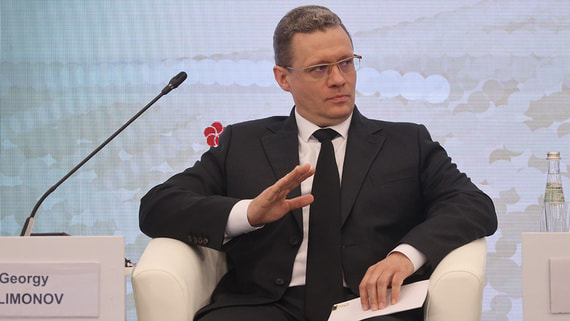
In a surprising turn of events, the Governor of Vologda Oblast, Georgy Filimonov, has agreed to give an interview to controversial journalist and socialite Ksenia Sobchak. The decision comes at a particularly turbulent time for the regional leader, who has been embroiled in a public scandal that has captured national attention. Political analysts suggest this media appearance represents a carefully orchestrated attempt by both parties to serve their respective interests in Russia’s complex political landscape.
The timing of this interview raises significant questions about the motivations behind such a high-profile media engagement. Filimonov, who has been facing mounting criticism over recent administrative decisions and alleged misconduct, appears to be seeking a platform to present his version of events directly to a national audience. For Sobchak, known for her provocative interviewing style and ability to secure exclusive conversations with controversial figures, this represents another opportunity to demonstrate her continued relevance in Russian media circles.
The Political Context Behind the Interview
Georgy Filimonov’s tenure as Governor of Vologda Oblast has been marked by both ambitious development projects and controversial decisions that have drawn criticism from various quarters. The region, located in northwestern Russia with a population of approximately 1.1 million people, has traditionally been known for its industrial heritage, particularly in metallurgy and forestry. Under Filimonov’s leadership, there have been attempts to diversify the regional economy and attract investment, though these efforts have been met with mixed results.
The current scandal engulfing the governor involves allegations that have sparked widespread public debate about accountability and transparency in regional governance. While specific details remain subject to investigation and official commentary, the situation has clearly created a need for the governor to address public concerns directly. Political consultants note that choosing Sobchak as an interviewer is a calculated risk – her audience tends to be urban, educated, and often skeptical of official narratives, making this an unconventional choice for crisis communication.
Ksenia Sobchak’s Media Empire and Influence
Ksenia Sobchak occupies a unique position in Russian media and politics. The daughter of Anatoly Sobchak, the first democratically elected mayor of Saint Petersburg and a mentor to Vladimir Putin, she has leveraged her family connections and personal ambition to build a substantial media presence. Her career has spanned television hosting, journalism, and even a symbolic presidential campaign in 2018, where she positioned herself as a candidate representing liberal opposition voices.
Her interview program has become known for securing conversations with figures who rarely speak to mainstream media, including businesspeople under investigation, politicians facing scandals, and cultural figures involved in controversies. This reputation for obtaining exclusive access makes her a valuable, if unpredictable, media partner. Sources close to the governor’s administration suggest that the decision to engage with Sobchak was debated extensively before receiving approval, with advisors weighing the potential benefits of reaching her substantial online following against the risks of her confrontational questioning style.
Strategic Calculations and Mutual Benefits
The arrangement appears to offer distinct advantages to both parties involved. For Governor Filimonov, an appearance on Sobchak’s platform provides access to an audience that might otherwise remain skeptical of official statements released through traditional government channels. The format of a long-form interview also allows for more nuanced explanations than press releases or brief news appearances typically permit. Additionally, the very act of agreeing to face potentially difficult questions can be framed as evidence of transparency and willingness to be held accountable.
For Sobchak, the interview represents continued relevance in an increasingly competitive media landscape where access to newsworthy subjects determines success. Her ability to secure an interview with a sitting governor during an active scandal reinforces her brand as a journalist who can obtain exclusive content. Furthermore, the controversy surrounding Filimonov virtually guarantees high viewership numbers and extensive social media discussion, metrics that translate directly into advertising revenue and platform influence.
Broader Implications for Russian Political Communication
This development reflects broader shifts in how Russian political figures approach crisis communication in the digital age. Traditional reliance on state-controlled media outlets and carefully managed press conferences is increasingly supplemented by appearances on independent platforms and social media channels. The calculation appears to be that authenticity and accessibility, even when mediated through potentially hostile interviewers, can be more effective than isolation and silence in managing public perception.
Political scientists studying Russian regional governance note that governors increasingly face pressure to maintain public profiles that extend beyond their immediate constituencies. With social media enabling rapid spread of scandal and criticism, regional leaders can no longer rely solely on local media relationships to control their narratives. The Filimonov-Sobchak interview, regardless of its outcome, will likely be studied as a case example of modern political crisis management in Russia’s evolving media environment.
Expert Opinion: This interview arrangement reveals how Russia’s political communication landscape is fragmenting, with officials increasingly recognizing that controlling narratives requires engagement across multiple media ecosystems. The success of Filimonov’s gambit will depend entirely on whether he can appear forthcoming without providing ammunition for further criticism – a balance that few politicians manage to achieve under Sobchak’s pointed questioning. Expect this model of crisis management through independent media platforms to become more common as regional officials recognize the limitations of traditional government communication channels.