
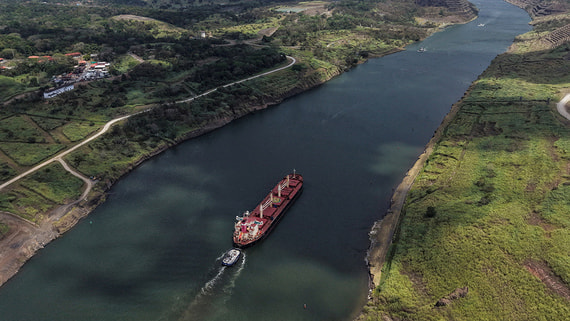
A series of unusual incidents involving Panama-flagged vessels in Chinese waters has sparked concerns about potential retaliation following the Central American nation’s decision to remove a Hong Kong-based holding company from operations at the Panama Canal. Maritime industry observers have noted an uptick in inspections, delays, and administrative complications affecting ships registered under the Panamanian flag when calling at Chinese ports, raising questions about whether commercial shipping is becoming collateral damage in broader geopolitical disputes.
The timing of these difficulties appears to correlate directly with Panama’s recent moves to reassert greater national control over canal operations, including the controversial decision to terminate or limit the involvement of CK Hutchison Holdings, a Hong Kong-based conglomerate that had operated key port facilities at both ends of the vital waterway. This decision, reportedly influenced by pressure from the United States, has apparently not gone unnoticed in Beijing, where officials have long viewed the Panama Canal as a strategically important chokepoint for global trade.
The Panama Canal Connection and Strategic Significance
The Panama Canal represents one of the world’s most critical maritime chokepoints, handling approximately 5-6% of global trade annually. Ships traversing this 50-mile waterway save thousands of miles compared to alternative routes around South America’s Cape Horn. CK Hutchison Holdings, founded by legendary Hong Kong tycoon Li Ka-shing, had operated the Balboa and Cristobal ports at the Pacific and Atlantic entrances to the canal respectively since the late 1990s, following the United States’ handover of canal control to Panama in 1999.
The company’s presence at these strategic locations had long been a source of concern for American policymakers, who worried about potential Chinese influence over a waterway crucial to U.S. naval mobility and commercial interests. When Panama moved to restructure these arrangements earlier this year, Beijing interpreted the action as part of a broader American strategy to contain Chinese commercial expansion in Latin America. The subsequent difficulties faced by Panama-flagged vessels in Chinese waters suggest that economic countermeasures may already be underway.
Pattern of Incidents Raises Industry Alarm
Shipping industry sources report that Panama-flagged vessels have experienced notably longer inspection times at major Chinese ports including Shanghai, Ningbo, and Shenzhen. Routine port state control inspections that typically take several hours have reportedly extended to multiple days in some cases, with authorities citing various technical violations and documentation issues. While Chinese officials have not publicly acknowledged any policy change, the pattern has become pronounced enough to attract attention from international maritime organizations and shipping companies.
Panama maintains the world’s largest ship registry, with approximately 8,000 vessels flying its flag, representing about 16% of the global merchant fleet by tonnage. This open registry system, sometimes called a “flag of convenience,” allows ship owners worldwide to register vessels in Panama regardless of the owner’s nationality, benefiting from favorable tax treatment and regulatory frameworks. The sheer scale of Panama’s registry means that any systematic targeting of its flagged vessels could have significant ripple effects throughout global supply chains.
Geopolitical Chess and Maritime Commerce
The developing situation reflects the increasingly complex intersection of international commerce and great power competition. China has invested heavily in port infrastructure across Latin America as part of its Belt and Road Initiative, and the Panama Canal has remained a symbolic and practical target for expanding influence. Beijing’s apparent willingness to create friction for Panama-flagged shipping demonstrates how maritime commerce can become leverage in diplomatic disputes, a tactic that observers note has historical precedents in various trade conflicts.
Industry analysts suggest that shipping companies may begin considering alternative flag registrations if the situation persists, potentially benefiting other major open registries such as Liberia, the Marshall Islands, or the Bahamas. However, such transitions involve significant administrative costs and complications, making them impractical short-term solutions. The maritime community is watching closely to see whether diplomatic channels can resolve the underlying tensions before more serious disruptions to global trade patterns emerge.
Expert Opinion: The apparent targeting of Panama-flagged vessels represents a calculated but deniable form of economic pressure that Beijing can escalate or de-escalate based on diplomatic developments. This situation underscores the vulnerability of flag-of-convenience registries to geopolitical manipulation and may accelerate discussions within the International Maritime Organization about protecting commercial shipping from becoming weaponized in state-to-state disputes. Expect Panama to face mounting pressure from both Washington and Beijing as this strategic waterway remains contested territory in the broader U.S.-China competition.