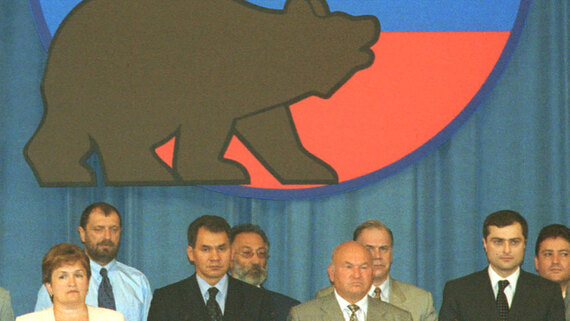
A quarter of a century ago, Russia witnessed one of the most significant political mergers in its post-Soviet history. The union of Sergei Shoigu’s Unity party and Yuri Luzhkov’s Fatherland-All Russia movement marked the birth of what would become the dominant political force in the country — United Russia. This carefully orchestrated consolidation of power fundamentally reshaped the Russian political landscape and established a framework for governance that continues to define the nation’s politics to this day.
The Political Climate of Late 1990s Russia
To understand the significance of this merger, one must first appreciate the chaotic political environment of Russia in the late 1990s. Following the dissolution of the Soviet Union in 1991, Russia experienced a tumultuous decade marked by economic instability, the controversial privatization of state assets, and a fragmented political system where numerous parties competed for influence. President Boris Yeltsin’s declining health and waning popularity created a power vacuum that various political factions sought to fill. Regional governors wielded enormous influence, and Moscow Mayor Yuri Luzhkov had emerged as one of the most powerful figures in Russian politics, having transformed the capital into a relatively prosperous island amid national economic turmoil.
Luzhkov’s Fatherland movement, established in 1998, quickly gained traction among regional elites and was seen as a serious contender for national power. The movement merged with All Russia, a bloc of influential regional governors, creating a formidable political force that many believed could challenge the Kremlin’s preferred candidates in the upcoming elections. This coalition represented the interests of established regional power brokers who had accumulated significant influence during the Yeltsin years and were reluctant to cede authority to any new central government.
The Rise of Vladimir Putin and the Unity Party
The political calculus changed dramatically with the unexpected rise of Vladimir Putin, whom Yeltsin appointed as Prime Minister in August 1999. Putin, a former KGB officer who had served in various government positions, was initially unknown to most Russians. However, his decisive handling of the Second Chechen War and his image as a strong, competent leader rapidly boosted his popularity. The Kremlin needed a political vehicle to support Putin’s presidential ambitions, and thus the Unity party was born in September 1999, just months before parliamentary elections.
Emergency Situations Minister Sergei Shoigu became the public face of Unity, lending the new party credibility through his reputation as an effective crisis manager. Shoigu had built a positive image responding to natural disasters and emergencies across Russia, making him one of the few government officials who enjoyed genuine public trust. Unity’s campaign emphasized stability, patriotism, and support for Putin’s leadership, presenting a stark contrast to the regional elite-dominated Fatherland-All Russia coalition. The December 1999 parliamentary elections proved to be a watershed moment, with Unity performing far better than expected and Fatherland-All Russia falling short of its anticipated dominance.
The Historic Merger and Its Consequences
Following Putin’s decisive victory in the March 2000 presidential election, the political winds shifted dramatically. Former rivals recognized that opposing the new president carried significant risks, while cooperation offered opportunities for continued relevance and influence. Negotiations between Unity and Fatherland-All Russia began in earnest, culminating in a formal merger that was finalized in December 2001. The new entity, christened United Russia, brought together former adversaries under a single political umbrella united by loyalty to the Putin administration.
This consolidation represented more than a simple merger of two political organizations — it symbolized the centralization of political power that would characterize Putin’s Russia for decades to come. Regional governors who had operated with considerable autonomy during the Yeltsin era found themselves integrated into a vertical power structure with the Kremlin at its apex. The merger effectively neutralized potential opposition from within the political establishment, as ambitious politicians recognized that advancement required membership in and loyalty to the new dominant party. United Russia would go on to secure overwhelming majorities in subsequent parliamentary elections, effectively functioning as the political arm of the presidential administration.
Today, United Russia remains the largest political party in Russia, holding a constitutional majority in the State Duma and dominating regional legislatures across the country. The party’s founding represents a pivotal moment in post-Soviet Russian history, when the chaotic pluralism of the 1990s gave way to a more centralized political system. The twenty-fifth anniversary of this merger offers an opportunity to reflect on how this consolidation of power has shaped Russia’s political trajectory and its implications for the country’s future governance.
Expert Opinion: The creation of United Russia through the Unity and Fatherland-All Russia merger represents a textbook case of elite consolidation following a period of political fragmentation. Political scientists note that this merger established the template for managed democracy in Russia, where formal democratic institutions exist but genuine political competition is carefully circumscribed. Looking forward, the party’s ability to maintain cohesion will likely depend on its capacity to manage elite interests during any future leadership transition, as the original architects of this political system gradually exit the stage.