Thirty-five years ago, the world watched in disbelief as tanks rolled through the streets of Moscow in what would become one of the most dramatic and consequential political events of the twentieth century. On August 19, 1991, a group of hardline Communist officials launched a coup attempt against Soviet President Mikhail Gorbachev, seeking to reverse his reforms and preserve the crumbling Soviet system. The events that unfolded over the following three days captivated global attention and prompted an outpouring of commentary from Western media outlets, governments, and analysts who recognized they were witnessing history in the making.
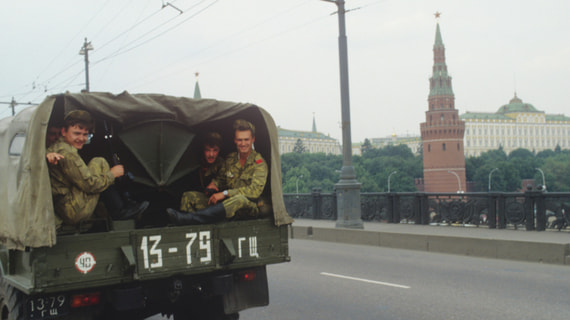
Western newspapers immediately grasped the magnitude of what was occurring in Moscow. The attempted putsch was orchestrated by the State Committee on the State of Emergency, known by its Russian acronym GKCHP, which included the vice president, defense minister, KGB chairman, and other senior officials. They claimed Gorbachev was ill and unable to perform his duties, placing him under house arrest at his vacation dacha in Crimea. Major publications like The New York Times, The Washington Post, and The Times of London deployed their correspondents to cover events around the clock, with front pages dominated by images of armored vehicles positioned near the Kremlin and crowds of ordinary Muscovites building barricades.
Global Condemnation and Cold War Anxieties
The international response was swift and overwhelmingly critical of the coup plotters. President George H.W. Bush, who had cultivated a personal relationship with Gorbachev, expressed deep concern and refused to recognize the legitimacy of the emergency committee. British Prime Minister John Major and French President François Mitterrand joined in condemning the unconstitutional seizure of power. Western commentators described the situation as a potential “planetary-scale tragedy,” understanding that the fate of thousands of nuclear weapons and the future of European security hung in the balance. The specter of a return to Cold War tensions, or worse, a civil war in a nuclear-armed superpower, created palpable anxiety in capitals from Washington to Tokyo.
Media analysis during those tense August days often focused on the broader historical context of Gorbachev’s reforms. Since coming to power in 1985, Gorbachev had introduced glasnost (openness) and perestroika (restructuring), policies that had fundamentally altered Soviet society but also created economic hardship and political instability. Western journalists noted that the coup represented the last desperate gambit by those who had most to lose from continued reform—the party apparatus, military-industrial complex, and security services that had defined Soviet power for decades. Editorials questioned whether the reforms had gone too far or not far enough, and whether Gorbachev had fatally weakened the system without building adequate alternatives.
The Rise of Yeltsin and the Failure of the Putsch
Perhaps no image from those days became more iconic than Boris Yeltsin, the president of the Russian Soviet Federative Socialist Republic, standing defiantly atop a tank outside the Russian White House, the parliament building. Western media immediately recognized Yeltsin as the hero of the resistance, a dramatic counterpoint to the colorless apparatchiks who had launched the coup. His bold stance, calling for a general strike and rallying citizens to defend democracy, was broadcast around the world. Correspondents reported on the remarkable scenes of unarmed Muscovites forming human chains to protect the White House, demonstrating a civic courage that contradicted decades of Western stereotypes about passive Soviet citizens.
The coup collapsed within three days, undone by poor planning, lack of popular support, and the refusal of key military units to fire on civilians. By August 21, the plotters were under arrest, and Gorbachev returned to Moscow, though he would find his authority fatally undermined. Western analysts immediately began debating what the failed coup meant for the future of the Soviet Union. Many predicted—correctly, as it turned out—that the real winner was not Gorbachev but Yeltsin, and that the centrifugal forces pulling the republics apart had been dramatically accelerated. The Baltic states quickly declared independence, and within months, the Soviet Union itself would cease to exist.
A Watershed Moment in World History
Looking back, Western historians and journalists have consistently identified the August 1991 coup attempt as one of the pivotal moments of the late twentieth century. The failed putsch delegitimized the Communist Party and the Soviet state apparatus, paving the way for the peaceful dissolution of the USSR in December 1991. It marked the definitive end of the Cold War and ushered in a new era of American global predominance. The dramatic events provided compelling television footage and newspaper copy, but more importantly, they represented a genuine popular uprising against authoritarianism—a moment when ordinary people, inspired by democratic ideals, stood against the machinery of a superpower state and prevailed.
The legacy of those August days remains contested. Some Western observers celebrated the triumph of democracy and free markets, viewing it as vindication of liberal values. Others, with the benefit of hindsight, noted that the chaotic transition that followed brought economic devastation, oligarchy, and eventually a return to authoritarian tendencies under Vladimir Putin. Nevertheless, the coup attempt remains a reminder of how quickly seemingly invincible political systems can crumble, and how courage and conviction can, at critical moments, shape the course of history.
Expert Opinion: The 1991 Soviet coup attempt represents a masterclass in how not to execute a seizure of power—the plotters failed to control communications, underestimated popular resistance, and lacked unified military support. Thirty-five years later, the event offers sobering lessons for understanding political transitions: the collapse of authoritarian systems often creates power vacuums that can be filled by new forms of authoritarianism rather than stable democracy. Future historians may ultimately view August 1991 not as the triumph of democracy, but as the opening chapter of Russia’s troubled and still-unfinished journey toward defining its political identity.