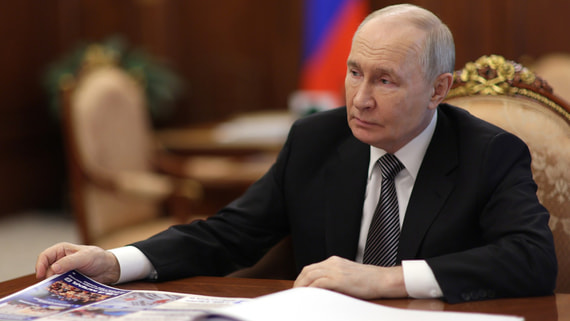
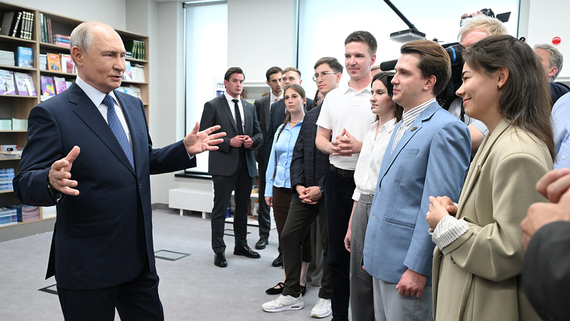
Russian President Vladimir Putin convened a meeting of the Council for Science and Education in Novosibirsk, one of Russia’s major scientific hubs, where he outlined six strategic proposals aimed at accelerating the country’s scientific and technological advancement. The session brought together leading scientists, government officials, and education experts to discuss the future trajectory of Russian research and innovation in an increasingly competitive global landscape. The meeting underscored the Kremlin’s renewed focus on achieving technological sovereignty amid ongoing geopolitical tensions and Western sanctions that have limited Russia’s access to foreign technologies.
Strategic Vision for Technological Independence
The proposals presented by Putin reflect Russia’s broader strategic goal of reducing dependence on foreign technologies and developing indigenous capabilities across critical sectors. Among the key initiatives discussed were increased funding for fundamental research, strengthening ties between academic institutions and industrial enterprises, and creating new mechanisms to retain talented scientists within the country. The President emphasized that Russia must develop its own technological base in areas ranging from microelectronics and artificial intelligence to biotechnology and advanced materials, sectors where Western restrictions have created significant challenges for Russian industry.
Novosibirsk was chosen as the venue for this important meeting due to its status as Russia’s third-largest city and a major center for scientific research. The city is home to the famous Akademgorodok, or Academic Town, established in 1957 during the Soviet era as a planned scientific community. This unique research hub houses dozens of research institutes and the prestigious Novosibirsk State University, making it a symbol of Russian scientific achievement. The choice of location sent a clear message about the government’s commitment to supporting regional scientific centers beyond Moscow and St. Petersburg.
Addressing Brain Drain and Research Funding
One of the central themes of the meeting was the challenge of retaining scientific talent within Russia. The country has experienced significant brain drain over the past three decades, with many talented researchers seeking opportunities abroad where funding is more abundant and working conditions are often more favorable. Putin’s proposals included measures to improve salaries for researchers, provide better housing options for young scientists, and create more attractive career pathways within domestic institutions. These initiatives build upon previous programs such as the “megagrants” scheme, which has sought to attract both Russian diaspora scientists and foreign researchers to work on projects in Russia.
The funding landscape for Russian science has undergone significant changes in recent years. While government spending on research and development has increased in nominal terms, experts note that it still lags behind leading scientific nations as a percentage of GDP. The United States, China, South Korea, and Israel all invest proportionally more in scientific research. Putin’s proposals call for not only increasing state funding but also incentivizing private sector investment in research and development through tax benefits and other mechanisms. The goal is to create a more diversified funding base that can support long-term scientific projects and breakthrough innovations.
Connecting Research to Industrial Application
A recurring challenge in Russian science has been the gap between academic research and practical industrial application. During the Soviet era, this connection was maintained through centralized planning and dedicated design bureaus. However, the transition to a market economy disrupted many of these linkages, leaving research institutes isolated from potential industrial partners. Putin’s proposals seek to address this issue by creating new platforms for collaboration between universities, research institutes, and manufacturing enterprises. Special emphasis was placed on priority sectors including aerospace, nuclear energy, information technology, and healthcare, areas where Russia maintains competitive advantages or faces urgent developmental needs.
The Council for Science and Education itself represents an important institutional mechanism for coordinating national research policy. Established to advise the President on matters related to scientific development and educational reform, the council brings together prominent academics, Nobel laureates, and government ministers. Its recommendations carry significant weight in shaping budget allocations and regulatory frameworks affecting the research community. The Novosibirsk meeting demonstrated the high-level attention being devoted to science policy at a time when technological capabilities are increasingly seen as determinants of national power and economic competitiveness.
Future Outlook and Implementation Challenges
While the six proposals outlined by Putin represent ambitious goals, their implementation will face considerable challenges. Bureaucratic obstacles, insufficient infrastructure, and competition for limited resources among scientific institutions all present potential barriers. Additionally, international scientific collaboration, which has historically been vital for Russian research, has been significantly curtailed due to geopolitical factors. Nevertheless, proponents argue that current pressures may ultimately accelerate domestic innovation by forcing Russian scientists and engineers to develop indigenous solutions. The coming months will reveal how these proposals are translated into concrete policies and funding decisions, with the scientific community watching closely to see whether rhetoric is matched by action.
Expert Opinion: The emphasis on technological sovereignty marks a significant shift in Russian science policy from international integration toward self-reliance, a strategy that carries both risks and potential rewards. While isolation from global scientific networks may slow progress in some areas, concentrated investment in priority sectors could yield breakthroughs if sustained over time. The success of these initiatives will ultimately depend on whether proposed funding increases materialize and whether bureaucratic reforms can create a more nimble and responsive research ecosystem.