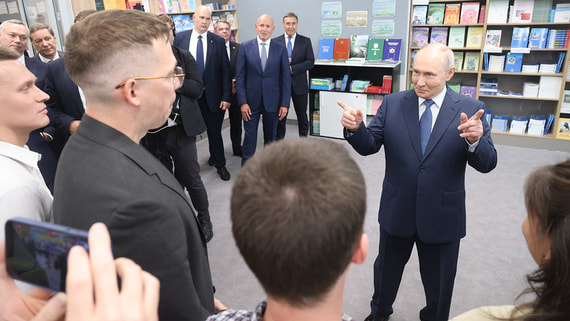
Russian President Vladimir Putin convened a high-level meeting of the Council for Science and Education in Novosibirsk, one of Russia’s major scientific centers in Siberia. During the session, Putin presented a comprehensive set of proposals aimed at accelerating the country’s scientific and technological advancement amid increasing international isolation and Western sanctions. The meeting brought together leading scientists, government officials, and education sector representatives to discuss the future trajectory of Russian research and innovation.
The choice of Novosibirsk as the venue for this significant gathering was far from coincidental. The city is home to Akademgorodok, a renowned scientific town established during the Soviet era in 1957, which houses numerous research institutes belonging to the Siberian Branch of the Russian Academy of Sciences. This historical scientific hub symbolizes Russia’s longstanding commitment to scientific excellence and serves as a reminder of past achievements that the current leadership hopes to replicate and surpass in the modern era.
Key Proposals for Scientific Advancement
During the council meeting, Putin emphasized the critical importance of achieving technological sovereignty in key sectors of the economy. The president outlined several strategic directions, including the development of domestic technologies in microelectronics, artificial intelligence, biotechnology, and advanced materials. These areas have become particularly crucial as Western sanctions have restricted Russia’s access to foreign technologies and components. The government’s approach involves significantly increasing funding for fundamental research while simultaneously creating mechanisms to rapidly translate scientific discoveries into practical applications.
Putin also addressed the need to retain talented scientists within Russia and attract specialists from abroad. The so-called “brain drain” has been a persistent challenge for Russian science, with many promising researchers seeking opportunities in Western countries due to better funding, equipment, and working conditions. To counter this trend, the president proposed enhancing grant programs, improving laboratory infrastructure, and increasing salaries for researchers engaged in priority scientific directions. Additionally, new housing programs and social benefits were discussed as incentives to make scientific careers more attractive to young professionals.
Education System Reforms and Industry Integration
The council meeting also focused extensively on reforming the education system to better serve the needs of the Russian economy. Putin called for closer integration between universities, research institutes, and industrial enterprises to ensure that scientific developments can be efficiently commercialized. This approach mirrors successful models implemented in other countries, where public-private partnerships have proven effective in driving innovation. The president specifically mentioned the need to revise educational curricula to include more practical training and exposure to real-world research challenges.
Furthermore, regional scientific development received significant attention during the discussions. Putin stressed that scientific advancement should not be concentrated solely in Moscow and St. Petersburg but should extend to regional centers like Novosibirsk, Kazan, Yekaterinburg, and Vladivostok. This decentralization strategy aims to leverage local expertise and resources while creating new opportunities for economic development across the vast Russian territory. Investment in regional scientific infrastructure, including the construction of new research facilities and technology parks, was highlighted as a priority for the coming years.
Historical Context and Future Outlook
Russia’s scientific tradition dates back centuries, with notable achievements in mathematics, physics, chemistry, and space exploration. The Soviet Union’s scientific accomplishments, including the launch of the first satellite and the first human spaceflight, demonstrated the country’s potential when resources were dedicated to research and development. However, the collapse of the Soviet Union led to a prolonged period of underinvestment in science, from which Russia has been attempting to recover for decades. The current geopolitical situation has added urgency to these efforts, as the country seeks to develop indigenous capabilities in areas previously dependent on foreign partnerships.
The outcomes of the Novosibirsk council meeting are expected to shape Russian science policy for years to come. While the ambitious goals outlined by Putin will require substantial investment and sustained effort to achieve, they reflect a recognition at the highest levels of government that scientific and technological capabilities are essential for national security and economic competitiveness. The implementation of these proposals will be closely watched both domestically and internationally as indicators of Russia’s ability to adapt to changing global circumstances and maintain its position as a significant player in scientific research.
Expert Opinion: The emphasis on technological sovereignty reflects Russia’s strategic pivot toward self-reliance in critical sectors, though achieving meaningful progress will require overcoming significant structural challenges including bureaucratic inefficiencies and limited international collaboration opportunities. Success in these initiatives will largely depend on the government’s ability to create genuinely competitive conditions for researchers and establish effective mechanisms for translating scientific achievements into commercial products, a historically weak point in the Russian innovation ecosystem.