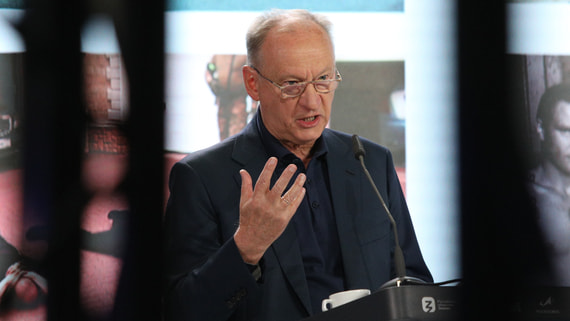
Nikolai Patrushev, Presidential Aide and Chairman of the Maritime Board of Russia, sat down with journalists ahead of his 75th birthday to share his views on critical issues facing the nation. The veteran security official, who has been one of the most influential figures in Russian politics for decades, addressed topics ranging from the development of Russia’s naval capabilities to what he describes as the resurgence of Nazi ideology in the modern world. His comments come at a time of heightened geopolitical tensions and ongoing military operations that have placed Russia at the center of international attention.
Patrushev, who previously served as Director of the Federal Security Service (FSB) from 1999 to 2008 and Secretary of the Security Council until 2024, remains a key figure in shaping Russia’s strategic vision. His transition to the role of Presidential Aide and head of the Maritime Board reflects the Kremlin’s emphasis on strengthening Russia’s position as a maritime power. Throughout his career spanning over five decades in security and intelligence services, Patrushev has been known for his hawkish stance on Western relations and his unwavering support for expanding Russian military capabilities.
Russia’s Maritime Ambitions and Naval Development
In his interview, Patrushev elaborated on Russia’s strategic maritime priorities, emphasizing the importance of maintaining a powerful naval presence across all major oceanic theaters. The Maritime Board, which he chairs, coordinates all activities related to Russia’s maritime policy, including shipbuilding programs, Arctic development, and the protection of maritime borders. Russia’s coastline stretches approximately 37,653 kilometers, making it the fourth-longest in the world and necessitating substantial naval resources for defense and projection of power.
The official highlighted ongoing modernization programs for the Russian Navy, which include the construction of new submarines, frigates, and support vessels. Russia has been investing heavily in its Northern Fleet, which operates in the strategically vital Arctic region, as well as its Black Sea and Pacific fleets. The development of hypersonic missiles capable of being launched from naval platforms has been a particular point of pride for Russian military planners. These weapons, including the Zircon hypersonic cruise missile, represent what Russian officials describe as a new generation of unstoppable strategic armaments that can evade existing missile defense systems.
Historical Context and the Question of Modern Nazism
Perhaps the most contentious portion of Patrushev’s remarks centered on his characterization of what he terms “modern Nazism” and its alleged manifestations in contemporary geopolitics. This rhetoric has been a consistent element of Russian official discourse, particularly since 2014 and intensifying since 2022. Patrushev drew parallels between current events and the historical struggle against Nazi Germany during World War II, a conflict that claimed an estimated 27 million Soviet lives and remains deeply embedded in Russian national consciousness.
The Great Patriotic War, as World War II is known in Russia, serves as a foundational element of national identity and is commemorated annually with Victory Day celebrations on May 9th. Russian officials frequently invoke this historical memory when framing current geopolitical conflicts, arguing that Russia continues to fight against fascist ideologies. Critics in the West and among Russian opposition figures have challenged this narrative, arguing that it represents a manipulation of historical memory for political purposes. Nevertheless, within Russia, such framing resonates strongly with a population that grew up with stories of wartime sacrifice and heroism.
Patrushev’s Influence on Russian Security Policy
Throughout his decades of service, Patrushev has been instrumental in shaping Russia’s security doctrine and foreign policy orientation. His tenure at the FSB coincided with the consolidation of power under President Vladimir Putin, and he has remained a trusted advisor through multiple presidential terms. Observers of Russian politics note that Patrushev represents the silovik faction—officials with backgrounds in security services who advocate for strong state control and assertive foreign policy. His views on Western intentions toward Russia have consistently been characterized by deep suspicion and the belief that NATO expansion represents an existential threat to Russian security.
As Patrushev approaches his 75th birthday, his continued prominence in Russian political life underscores the enduring influence of his generation of security officials. The Maritime Board position allows him to maintain significant input on strategic decisions while potentially preparing for an eventual transition of responsibilities to younger officials. His comments to journalists offer a window into the worldview that continues to guide Russian policy at the highest levels, reflecting both historical grievances and contemporary strategic calculations that will likely shape Russia’s course for years to come.
Expert Opinion: Patrushev’s remarks illustrate the deeply entrenched security-first mentality that dominates Kremlin decision-making, where historical narratives are weaponized to justify current policies. His continued influence suggests that Russia’s confrontational posture toward the West will persist regardless of diplomatic overtures, as the silovik faction views compromise as weakness. The emphasis on maritime power indicates Russia will continue investing in naval capabilities as a tool for projecting influence beyond its immediate borders, particularly in the Arctic where resource competition is intensifying.