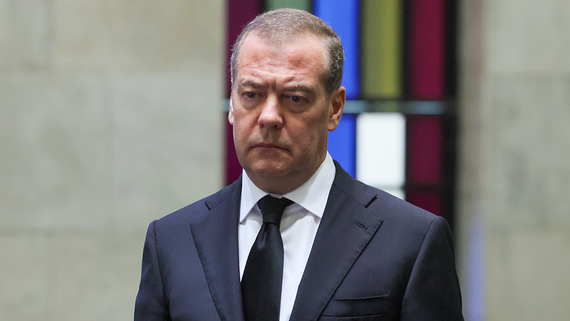
Dmitry Medvedev, Deputy Chairman of Russia’s Security Council and former President, has issued a sharp response to discussions within the European Union about potentially banning entry for Russian citizens who participated in the special military operation in Ukraine. In his characteristically direct manner, Medvedev suggested that such a measure would actually serve Russia’s interests by ensuring that millions of citizens lose their illusions about the West for decades to come. The statement reflects the deepening divide between Russia and Western nations as the conflict continues into its third year.
The comments came amid ongoing debates within EU member states about expanding sanctions and restrictions targeting Russian nationals. Several European countries have already implemented various travel limitations on Russian citizens since the beginning of the conflict in 2022, with some nations completely suspending tourist visa issuance. The prospect of specifically targeting military personnel and veterans represents a new dimension in the sanctions landscape, one that would directly affect a significant portion of the Russian population.
The Evolving Sanctions Landscape
Since February 2022, the European Union has implemented numerous rounds of sanctions against Russia, ranging from economic measures targeting key industries to personal restrictions on government officials and businesspeople. Travel restrictions have been a contentious topic among EU members, with Baltic states and Poland advocating for stricter measures while others have expressed concerns about collective punishment of ordinary citizens. The potential ban on military operation participants would represent one of the most far-reaching personal restrictions yet contemplated.
The practical implementation of such a ban would present significant challenges. Identifying individuals who served in the conflict zone would require extensive intelligence sharing and verification mechanisms. Additionally, questions arise about how such restrictions would apply to conscripts versus contract soldiers, medical personnel, and support staff. Despite these complications, proponents argue that the measure would send a strong signal about European values and accountability for actions in the conflict.
Medvedev’s Shifting Rhetoric
Dmitry Medvedev’s transformation from a relatively moderate political figure during his 2008-2012 presidency to one of the most hawkish voices in the Russian government has been remarkable to observe. Once seen as a potential bridge between Russia and the West, advocating for modernization and improved relations, Medvedev has increasingly adopted confrontational rhetoric since returning to a prominent role in Russian politics. His frequent statements on social media have become known for their provocative nature, often warning of dire consequences for Western nations and dismissing any possibility of reconciliation.
Political analysts suggest that Medvedev’s hardline positioning serves multiple purposes within Russian domestic politics. By framing Western restrictions as ultimately beneficial for Russia’s goal of reducing Western influence on its population, he converts potential negative news into a narrative of national consolidation. This rhetorical strategy aligns with the broader governmental messaging that portrays the conflict as an existential struggle against Western encroachment rather than a regional territorial dispute.
Implications for Future Relations
The exchange highlights the increasingly difficult path toward any future normalization of relations between Russia and European nations. With both sides implementing measures that create long-term barriers to interaction, the foundation for eventual diplomatic engagement continues to erode. European officials maintain that accountability measures are necessary responses to violations of international law, while Russian leadership frames these same measures as evidence of Western hostility that justifies further separation.
For the millions of Russian citizens who have participated in military operations, the potential travel ban would indeed represent a concrete and lasting consequence of their service. Whether this serves to strengthen their loyalty to the Russian state, as Medvedev suggests, or creates lasting resentment will likely depend on how the conflict ultimately concludes and how Russian society processes these experiences in the years to come. What remains clear is that the human cost of the ongoing tensions extends far beyond the battlefield, reshaping the possibilities for an entire generation’s engagement with the wider world.
Expert Opinion: The mutual hardening of positions between Russia and the EU suggests we are witnessing the construction of a new long-term division in Europe that could persist for decades regardless of how the military conflict concludes. Travel bans targeting military participants would create a legally codified barrier affecting millions, while Russia’s rhetorical embrace of isolation indicates little interest in maintaining the bridges that previous generations worked to build. Future diplomatic normalization will require addressing not just immediate conflict issues but also unwinding these accumulated layers of restrictive measures.