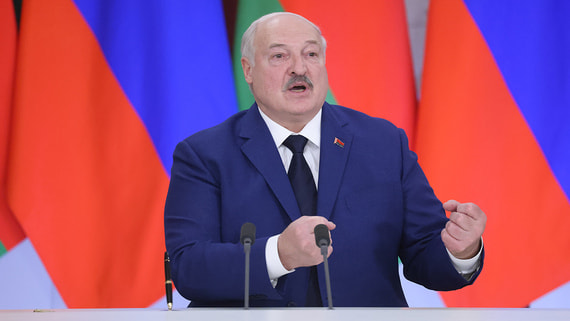
Recent data from Medialogia, Russia’s leading media monitoring and analytics company, has revealed a significant increase in mentions of Belarusian President Alexander Lukashenko across several major social media platforms. The findings suggest a notable shift in public discourse surrounding the long-serving leader, whose political image has traditionally been associated with authoritarian governance and directive leadership style. Experts observing these trends note that Lukashenko’s public persona appears to be undergoing a deliberate transformation, marking a potential new chapter in how the Belarusian government approaches digital communication and public relations.
The Evolution of Political Image in the Digital Age
For nearly three decades, Alexander Lukashenko has maintained firm control over Belarus, earning him the unofficial title of “Europe’s last dictator” from Western critics. His leadership style has historically been characterized by centralized decision-making, limited tolerance for opposition, and tight control over traditional media outlets. However, the landscape of political communication has shifted dramatically with the rise of social media platforms, forcing even the most traditional political figures to adapt their strategies. The Medialogia data suggests that Lukashenko’s communication team has recognized this shift and is actively working to reshape his digital presence.
The increased social media activity comes at a particularly sensitive time for Belarus. Following the controversial 2020 presidential election, which sparked mass protests and international condemnation, the country has faced unprecedented scrutiny from the global community. Western nations imposed severe economic sanctions, and Belarus has increasingly aligned itself with Russia, particularly following Moscow’s military operation in Ukraine. In this context, the strategic use of social media becomes not just a matter of domestic politics but a tool for international positioning as well.
Understanding the Medialogia Findings
Medialogia, which has been tracking media mentions and sentiment analysis since 2003, employs sophisticated algorithms to monitor discussions across various platforms including Russian social networks VKontakte and Odnoklassniki, as well as messaging services like Telegram. The company’s methodology considers not only raw mention counts but also factors such as engagement rates, sentiment distribution, and the influence of accounts sharing content. The uptick in Lukashenko-related content suggests a coordinated effort to increase visibility and potentially reshape public perception of the Belarusian leader among Russian-speaking audiences.
Political communication experts have noted that authoritarian leaders worldwide have increasingly recognized the importance of social media in maintaining legitimacy and controlling narratives. Unlike traditional broadcast media, social platforms offer opportunities for more personalized, seemingly authentic content that can humanize political figures and create emotional connections with audiences. This strategy has been employed successfully by various leaders across the political spectrum, from populist politicians in Western democracies to strongmen in more restrictive political environments.
Historical Context and Strategic Implications
Lukashenko’s tenure as president began in 1994, making him one of the longest-serving leaders in the post-Soviet space. Throughout his rule, he has demonstrated remarkable political adaptability, balancing relationships with Russia and the West according to strategic necessity. His image as a strong, no-nonsense leader who maintains stability has been central to his domestic appeal, particularly among older voters and rural populations who remember the economic chaos of the early post-Soviet period. The current social media push may represent an attempt to extend this appeal to younger, more digitally connected demographics.
The timing of this image recalibration is significant given the broader geopolitical context in Eastern Europe. As Belarus continues to navigate its complex relationship with Russia while facing isolation from the West, maintaining domestic support becomes increasingly crucial. Social media offers a platform to communicate directly with citizens, bypassing traditional media channels and potentially countering narratives from opposition figures, many of whom have established significant online followings from exile abroad.
Looking Forward: Digital Diplomacy and Domestic Politics
The transformation of Lukashenko’s digital presence reflects broader trends in how authoritarian governments approach communication in the internet age. Rather than simply attempting to suppress online discourse, many have adopted more sophisticated strategies that include active participation and narrative shaping. Whether this approach will succeed in fundamentally altering public perception remains to be seen, but the Medialogia data indicates that the initial phase of increased visibility has been achieved. As Belarus continues to face economic pressures and international isolation, the effectiveness of this digital strategy may prove crucial for maintaining political stability in the months and years ahead.
Expert Opinion: The strategic pivot toward enhanced social media presence suggests Lukashenko’s administration recognizes that traditional propaganda methods are insufficient for reaching younger demographics who consume news primarily through digital channels. This approach mirrors similar efforts by other post-Soviet leaders seeking to modernize their public image while maintaining authoritarian control. The success of this rebranding effort will likely depend on whether substantive policy changes accompany the cosmetic digital makeover, as social media audiences tend to be more skeptical of purely performative gestures.