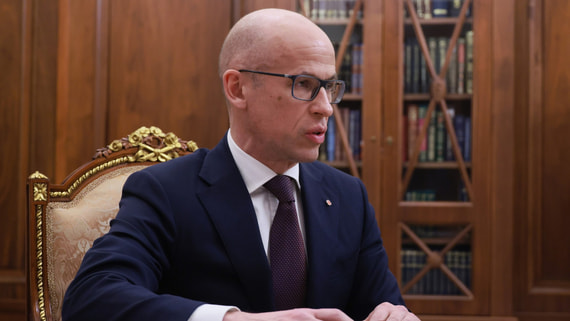
In a significant political development, Alexander Brechalov, who has led the Republic of Udmurtia since 2017, has officially submitted his resignation. The departure of this prominent Russian regional official marks the end of an era for the republic located in the western Urals region of Russia. Brechalov’s tenure was marked by ambitious economic initiatives, public engagement campaigns, and various controversies that shaped his complex political legacy in one of Russia’s ethnically diverse federal subjects.
The resignation comes amid a broader pattern of gubernatorial changes across Russian regions, as the Kremlin continues to reshape regional leadership in accordance with evolving political priorities. Brechalov’s decision to step down has sparked discussions about the future direction of Udmurtia, a republic known for its defense industry, oil production, and the distinctive Udmurt ethnic minority that comprises roughly a quarter of its population of approximately 1.5 million people.
From Business Leadership to Regional Politics
Alexander Brechalov’s path to regional leadership was unconventional by Russian standards. Born in 1973, he built his early career in the business sector before transitioning to public service. He gained national prominence as the head of the All-Russia People’s Front, a political movement created to support Vladimir Putin‘s policies. This position provided him with valuable connections and visibility within Russia’s political establishment, eventually leading to his appointment as the acting head of Udmurtia in April 2017.
His appointment came during a period of significant regional leadership turnover in Russia, as the Kremlin sought to install a new generation of technocratic governors. Brechalov represented this trend, arriving in Udmurtia as an outsider with a mandate to modernize the region’s economy and improve governance efficiency. He was elected to the position in September 2017, winning with approximately 78% of the vote in what was largely viewed as a controlled electoral process typical of Russian regional politics.
Economic Initiatives and Governance Challenges
During his eight-year tenure, Brechalov implemented several economic development programs aimed at diversifying Udmurtia’s economy beyond its traditional reliance on defense manufacturing and oil extraction. The region is home to the famous Kalashnikov Concern, manufacturer of the world-renowned AK-47 rifle and its derivatives. Under Brechalov’s leadership, efforts were made to attract investment in other sectors, including agriculture, information technology, and tourism, with varying degrees of success.
However, his governance was not without controversy. Brechalov faced criticism for certain public statements and policy decisions that drew attention from federal authorities and opposition figures alike. The region struggled with demographic challenges common to many Russian territories, including population decline and youth migration to larger cities like Moscow and Saint Petersburg. Economic indicators showed mixed results, with some improvements in certain sectors offset by persistent structural problems in others.
Brechalov was also known for his active presence on social media, which set him apart from many traditional Russian regional leaders. He frequently engaged with citizens through various platforms, addressing complaints and promoting regional initiatives. This approach earned him both praise for accessibility and criticism for what some perceived as prioritizing public relations over substantive governance.
The Broader Context of Russian Regional Politics
The resignation must be understood within the larger framework of Russian regional governance. Governors in Russia serve at the pleasure of the president, and while elections are held, the Kremlin maintains significant influence over who leads the country’s 89 federal subjects. Gubernatorial resignations often occur as part of coordinated political strategies rather than purely personal decisions, and Brechalov’s departure follows this established pattern.
Udmurtia now faces a period of transition as it awaits the appointment of an acting governor and eventual elections. The republic’s strategic importance as a center of defense production ensures that federal authorities will carefully manage the succession process. Whoever succeeds Brechalov will inherit both the accomplishments and unresolved challenges of his administration, including the need to balance federal priorities with local economic development and maintain social stability in the region.
Expert Opinion: Brechalov’s resignation appears to be part of a systematic renewal of regional leadership that the Kremlin periodically undertakes to maintain control and inject fresh energy into territorial governance. His successor will likely be another federally-appointed technocrat tasked with managing Udmurtia’s defense industry assets during a period of heightened military production demands. The coming months will reveal whether this change represents a routine rotation or signals deeper policy shifts for the strategically important Ural region.