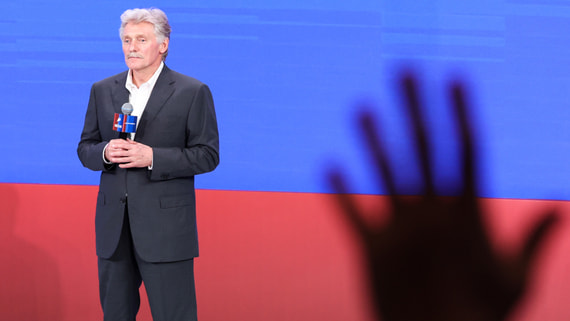
Dmitry Peskov, the official spokesman for the Kremlin and Press Secretary to President Vladimir Putin, delivered a thought-provoking address at the “Territory of Meanings” youth educational forum, sharing his perspectives on governance, crisis management, and the difficult choices that leaders must sometimes make. The annual forum, which brings together young professionals, students, and government officials, provided a platform for one of Russia’s most prominent political figures to discuss the philosophy behind decision-making at the highest levels of power.
Key Takeaways
- Peskov described an ideal crisis as one that creates conditions for transformation when managed with strategic thinking and willingness to face public resistance.
- The Kremlin spokesman defended unpopular decisions as sometimes necessary for long-term national interests, accepting short-term political costs.
- The Territory of Meanings forum attracts thousands of young Russians annually and serves as a key government channel for promoting official perspectives.
- Peskov has been Putin’s primary spokesman since 2012, making him central to Russian official communications during periods of international pressure.
- The messaging strategy frames current sanctions and geopolitical tensions as opportunities for resilience and self-reliance rather than setbacks.
During his speech, Peskov elaborated on what he described as the concept of an “ideal crisis” – a situation that, while challenging, presents opportunities for transformation and growth when handled correctly. The spokesman emphasized that effective crisis management requires not only strategic thinking but also the willingness to make decisions that may initially face public resistance. This candid discussion offered rare insight into the mindset of those navigating Russia’s complex political landscape during a period of significant international tensions and domestic challenges.
Peskov's Framework for Turning Crises Into Opportunities
Peskov’s remarks on crisis management reflect a broader philosophical approach to governance that has characterized Russian political discourse in recent years. The concept of viewing crises as opportunities rather than purely negative events has deep roots in political theory, dating back to ancient strategists who recognized that periods of instability often create conditions for significant change. In the Russian context, this perspective has been particularly relevant as the country has navigated various economic, political, and international challenges over the past decade.
The Kremlin spokesman’s discussion of “unpopular decisions” touches on one of the fundamental tensions in democratic and semi-democratic systems: the balance between responding to public opinion and implementing policies that leaders believe serve long-term national interests. Political scientists have long debated this tension, with some arguing that true leadership requires the courage to pursue necessary but unpopular courses of action, while others contend that sustained public opposition to policies indicates a fundamental disconnect between government and citizenry. Peskov appeared to advocate for the former position, suggesting that effective governance sometimes requires accepting short-term political costs for perceived long-term benefits.
Territory of Meanings Forum as a Youth Engagement Platform
The “Territory of Meanings” forum, where Peskov delivered his remarks, has become one of Russia’s premier platforms for dialogue between government officials and young citizens. Established as part of a broader initiative to engage with Russia’s youth population, the forum typically features discussions on politics, social issues, economics, and national identity. The event attracts thousands of participants annually, including students, young professionals, activists, and representatives from various regions across the country. Government officials use the platform to communicate policy priorities and gather feedback from younger generations who will shape Russia’s future.
The forum represents part of a larger effort by the Russian government to cultivate civic engagement among young people while also promoting official perspectives on key issues. Similar youth forums have been held in various formats since the mid-2000s, reflecting an understanding among Russian leadership that maintaining connections with younger demographics is essential for long-term political stability. Peskov’s participation in such events underscores the importance the Kremlin places on these communication channels, particularly during periods when Russia faces significant international pressure and domestic economic challenges.
Peskov's Role and the Broader Messaging Pattern
Dmitry Peskov has served as the Kremlin’s primary spokesman since 2012, though his work with President Putin dates back to the early 2000s. Over the years, he has become one of the most recognizable faces of Russian official communications, regularly addressing both domestic and international media on matters of state policy. His role requires navigating complex narratives and often defending controversial government positions, making his philosophical reflections on governance particularly noteworthy for observers seeking to understand Kremlin thinking.
The themes Peskov addressed at the forum – crisis management, difficult decisions, and long-term strategic thinking – resonate with broader patterns in Russian political communication. As Russia continues to face economic sanctions, geopolitical tensions, and internal development challenges, the government’s messaging has increasingly emphasized resilience, self-reliance, and the acceptance of short-term difficulties in pursuit of national objectives. Whether this approach will prove effective in maintaining public support over the long term remains a subject of intense debate among political analysts and ordinary citizens alike.
What This Signals About Kremlin Messaging
Peskov’s speech reveals a deliberate narrative architecture the Kremlin is constructing for domestic audiences. By reframing crises as transformative opportunities, Russian leadership is attempting to shift public perception from enduring hardship to participating in national renewal. This rhetorical strategy provides political cover for policies that impose real costs on citizens while promising abstract future benefits.
The choice of venue matters significantly. Youth forums allow the government to test and refine messaging with demographics whose long-term support is essential for political continuity. Young Russians face different economic pressures than older generations who remember Soviet-era difficulties, making their buy-in to the short-term sacrifice narrative less certain.
The emphasis on leaders making unpopular decisions reflects a governance philosophy that prioritizes executive judgment over responsive democracy. This framing preemptively dismisses public criticism as short-sighted, positioning opposition to government policy as failure to understand strategic necessity rather than legitimate political disagreement.
Questions Readers Are Asking
What is the Territory of Meanings forum in Russia?
It is an annual youth educational forum that brings together students, young professionals, and government officials for discussions on politics, economics, and national identity. Established in the mid-2000s, it serves as a platform for Kremlin officials to communicate priorities to younger demographics and gather feedback from future leaders.
How long has Dmitry Peskov been Putin's spokesman?
Peskov has served as the Kremlin’s primary spokesman since 2012, though his work with President Putin began in the early 2000s. He regularly addresses domestic and international media on state policy and has become one of the most recognizable faces of Russian official communications.
What did Peskov mean by an ideal crisis?
Peskov described an ideal crisis as a challenging situation that, when handled with strategic thinking and willingness to accept unpopular decisions, creates opportunities for transformation and growth rather than pure setback. This framing positions current Russian difficulties as potentially beneficial in the long term.
Expert Opinion: Peskov’s remarks signal the Kremlin’s continued effort to frame current challenges as transformative opportunities rather than setbacks, a narrative strategy designed to maintain public patience during prolonged periods of difficulty. This messaging approach suggests Russian leadership is preparing the population for sustained pressure while attempting to position controversial policies as necessary sacrifices for future stability. How effectively this framing resonates with younger generations, who face different economic realities than their predecessors, will likely prove crucial for Russia’s political trajectory in the coming decade.