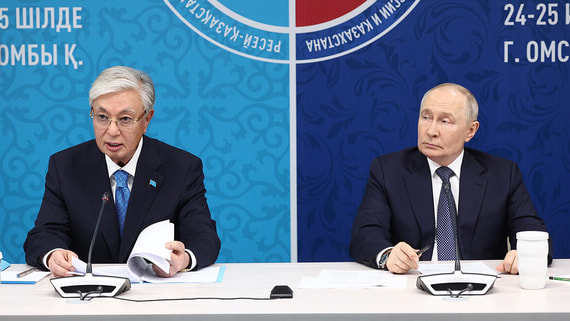
During recent diplomatic exchanges, Kazakhstan’s President Kassym-Jomart Tokayev raised the possibility of freezing the ongoing conflict in Ukraine, referencing the historic Istanbul negotiations as a potential framework for peace. However, Russian President Vladimir Putin firmly rejected this proposal, highlighting the deep complexities and divergent interests that continue to shape the geopolitical landscape surrounding the war. The exchange between the two leaders underscores the challenging diplomatic terrain that any peace initiative must navigate.
Tokayev’s mention of the Istanbul talks, which took place in late March and early April 2022, rekindled discussions about what many consider a missed opportunity for early conflict resolution. During those negotiations, Ukrainian and Russian delegations reportedly came close to reaching a preliminary agreement that would have seen Ukraine adopt a neutral status in exchange for security guarantees. However, the talks ultimately collapsed, with both sides offering conflicting accounts of why the promising dialogue failed to produce results.
The Istanbul Negotiations: A Pivotal Moment That Slipped Away
The Istanbul negotiations represent one of the most significant diplomatic efforts to end the conflict in its early stages. Held just weeks after Russia launched its full-scale military operation in February 2022, the talks brought together high-level delegations from both countries under Turkish mediation. Reports suggest that a draft agreement was on the table, potentially addressing Ukraine’s NATO aspirations, the status of Crimea, and security arrangements for both nations. Western officials, including former British Prime Minister Boris Johnson, were later accused by Russian sources of discouraging Ukraine from accepting the terms, though these claims have been disputed by Western governments.
Putin has consistently referenced the Istanbul framework in subsequent statements, arguing that Russia was prepared to accept a negotiated settlement that Ukraine ultimately rejected under Western pressure. Ukrainian officials, meanwhile, have pointed to the discovery of atrocities in Bucha and other occupied territories as evidence that Russia was not negotiating in good faith. This fundamental disagreement over what happened in Istanbul continues to poison the well for future diplomatic initiatives.
Kazakhstan’s Delicate Balancing Act
President Tokayev’s intervention reflects Kazakhstan’s increasingly complex position as a close Russian ally that has nonetheless sought to maintain a degree of independence on the Ukraine question. As a member of the Eurasian Economic Union and the Collective Security Treaty Organization, Kazakhstan maintains deep economic and security ties with Moscow. However, Tokayev has carefully avoided endorsing Russia’s military actions and has expressed support for Ukraine’s territorial integrity in various international forums. This balancing act has allowed Kazakhstan to preserve relationships with both Russia and Western nations while positioning itself as a potential mediator.
Kazakhstan’s approach is shaped by its own historical experiences and security concerns. As the largest landlocked country in the world with significant Russian-speaking populations in its northern regions, Kazakhstan is acutely aware of the implications of the conflict for post-Soviet territorial arrangements. Tokayev’s government has welcomed Russian businesses and citizens fleeing sanctions while simultaneously expanding economic ties with China and maintaining dialogue with European partners.
Putin’s Rejection: Strategic Calculations and War Aims
Putin’s dismissal of Tokayev’s proposal reveals the Russian leadership’s current assessment of the conflict’s trajectory. Moscow has repeatedly stated that any settlement must acknowledge “realities on the ground,” a reference to Russian-controlled territories in eastern and southern Ukraine. The Kremlin has also demanded Ukraine’s demilitarization and formal abandonment of NATO membership aspirations as preconditions for serious negotiations. These maximalist positions leave little room for the kind of compromise that a conflict freeze would require.
Military analysts suggest that Russia may believe time is on its side, as Western support for Ukraine faces increasing political challenges in both the United States and Europe. The upcoming American presidential election and growing fiscal pressures on European governments have raised questions about the sustainability of military and economic assistance to Kyiv. From Moscow’s perspective, a frozen conflict might simply lock in current positions without achieving Russia’s broader strategic objectives.
The Road Ahead: Obstacles to Peace
The fundamental obstacle to any negotiated settlement remains the vast gulf between Ukrainian and Russian positions on core issues. Ukraine has consistently demanded the restoration of its 1991 borders, including Crimea, while Russia considers the annexed territories non-negotiable. Security guarantees acceptable to both parties remain elusive, with Ukraine seeking NATO-style protections that Russia categorically opposes. Until these fundamental disagreements are addressed, proposals for freezing the conflict are likely to remain diplomatic talking points rather than actionable peace frameworks.
International mediators, including Turkey, China, and various African and Latin American nations, have attempted to bridge these divides with limited success. The complexity of the situation is compounded by the human cost of the conflict, with thousands of casualties on both sides and millions of displaced Ukrainians. As the war enters its fourth year, the international community continues to search for pathways to peace while the fighting shows no signs of abating.
Expert Opinion: The exchange between Tokayev and Putin illustrates the fundamental impasse in current peace efforts: Russia seeks to consolidate territorial gains while Ukraine demands full restoration of sovereignty. Until one side achieves decisive military advantage or both face unsustainable costs, meaningful negotiations remain unlikely. Kazakhstan’s mediation attempts, while diplomatically valuable, cannot bridge positions that are currently irreconcilable at their core.