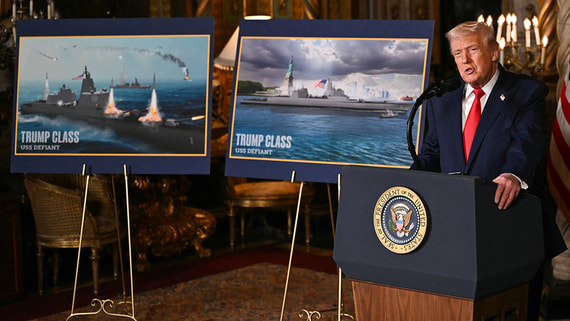
In a significant shift in American naval policy, President Donald Trump has announced plans to modify the design of US aircraft carriers and permit foreign shipyards to construct the first two vessels of a new class of warships. This decision marks a dramatic departure from decades of defense procurement practices that have kept the construction of major combat vessels exclusively within American borders. The announcement has sparked intense debate among defense analysts, shipbuilders, and lawmakers about the implications for national security and the domestic shipbuilding industry.
The move comes as the US Navy faces mounting pressure to modernize its aging fleet while contending with spiraling costs and construction delays. American aircraft carriers, long considered the crown jewels of naval power projection, have faced criticism for their increasingly expensive price tags and lengthy build times. The latest Gerald R. Ford-class carriers, for instance, have experienced significant cost overruns and technical challenges, with the lead ship ultimately costing over $13 billion—far exceeding initial estimates.
A Historic Shift in Naval Construction Policy
For more than a century, the United States has maintained strict policies requiring major warships to be built in domestic shipyards. This practice, rooted in national security concerns and the desire to maintain a robust industrial base, has been a cornerstone of American defense policy. The decision to potentially allow foreign construction of even a limited number of vessels represents a fundamental reassessment of these longstanding principles. Critics argue that outsourcing warship construction could compromise sensitive military technologies and weaken America’s shipbuilding capabilities, while supporters contend that international competition could drive down costs and accelerate delivery timelines.
The aircraft carrier design modifications Trump referenced appear aimed at addressing persistent issues that have plagued recent carrier programs. The Ford-class carriers introduced revolutionary but problematic technologies, including the Electromagnetic Aircraft Launch System (EMALS) and Advanced Arresting Gear (AAG), which have required extensive troubleshooting. Industry experts suggest that any design revisions might focus on simplifying these systems or incorporating lessons learned from their troubled development. The Navy has long struggled to balance cutting-edge innovation with reliability and cost-effectiveness in its carrier programs.
Implications for the Defense Industry and Global Alliances
The proposal to allow foreign construction of the first two ships of a new warship class raises significant questions about which allied nations might participate in such a program. Countries like Japan, South Korea, and several European nations possess advanced shipbuilding capabilities and maintain close defense relationships with the United States. South Korea, in particular, has emerged as a global leader in commercial and naval shipbuilding, producing vessels at costs significantly lower than their American counterparts. However, any such arrangement would require extensive safeguards to protect classified technologies and ensure interoperability with existing US Navy systems.
American shipbuilding unions and domestic defense contractors have expressed alarm at the prospect of foreign competition for military contracts. The US shipbuilding industry, already struggling with workforce shortages and aging infrastructure, could face additional challenges if major contracts flow overseas. Supporters of domestic construction argue that the jobs and industrial expertise generated by building warships at home provide strategic value beyond the vessels themselves. They point to the difficulty of rapidly expanding shipbuilding capacity during wartime if peacetime construction has been outsourced to foreign yards.
Strategic Context and Future Outlook
The timing of this announcement reflects broader concerns about American naval readiness amid growing geopolitical tensions. China’s rapid naval expansion has prompted calls for the US to accelerate its own shipbuilding programs, while Russia continues to modernize its fleet despite economic constraints. The Pentagon has set ambitious goals for fleet expansion, but current production rates fall far short of these targets. Trump’s willingness to consider unconventional approaches, including foreign construction, suggests recognition that traditional methods may be insufficient to meet emerging strategic challenges. As Congress prepares to debate the proposal, the outcome will have lasting implications for American sea power and the future of the defense industrial base.
Expert Opinion: This policy shift signals a fundamental recalibration of how the United States approaches naval superiority in an era of great power competition. While foreign construction could accelerate fleet modernization and reduce costs, the long-term risks to domestic shipbuilding capacity and technology security may outweigh short-term gains. Ultimately, any successful implementation will require unprecedented levels of allied coordination and robust counterintelligence measures to prevent adversaries from exploiting these new international partnerships.