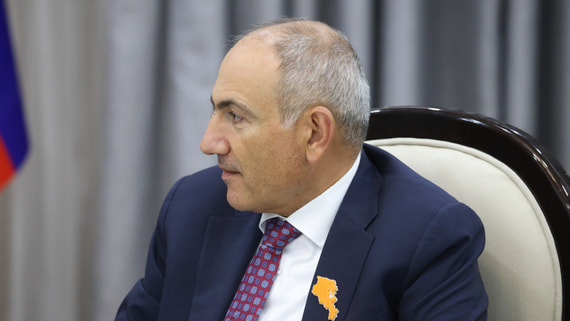
Armenian Prime Minister Nikol Pashinyan made a significant diplomatic appearance by participating in the Eurasian Economic Union (EAEU) council meeting for the first time in approximately eighteen months. This return to the regional economic bloc’s summit comes amid ongoing tensions between Armenia and its traditional ally Russia, raising questions about Yerevan’s future orientation and its commitment to the Moscow-led economic partnership. The move has attracted considerable attention from analysts watching the delicate balance Armenia attempts to maintain between its historical ties with Russia and its growing engagement with Western institutions.
Pashinyan’s absence from previous EAEU gatherings had been notably conspicuous, particularly as Armenia navigated the aftermath of the 2020 Nagorno-Karabakh war and the subsequent 2023 Azerbaijani military operation that resulted in the displacement of the region’s Armenian population. During this period, Armenian-Russian relations deteriorated significantly, with Yerevan expressing frustration over what it perceived as Moscow’s failure to fulfill its security obligations under the Collective Security Treaty Organization (CSTO).
Armenia’s Complex Relationship with the Eurasian Economic Union
Armenia joined the Eurasian Economic Union in 2015, becoming one of the five member states alongside Russia, Belarus, Kazakhstan, and Kyrgyzstan. The EAEU was established to promote economic integration among post-Soviet states, creating a single market with the free movement of goods, services, capital, and labor. For Armenia, a landlocked country with closed borders with Turkey and Azerbaijan, membership provided crucial economic lifelines and access to the vast Russian market. Armenian migrant workers in Russia, whose remittances constitute a significant portion of Armenia’s GDP, benefited from the union’s labor mobility provisions.
However, Pashinyan has increasingly expressed ambivalence about Armenia’s participation in the bloc. In recent years, the Prime Minister has questioned the practical benefits of membership, particularly in light of the security crisis his country faced. He has pointed to instances where EAEU member states, particularly Russia, appeared to prioritize relationships with Azerbaijan over their obligations to fellow member Armenia. This frustration has manifested in various diplomatic moves, including Armenia’s decision to freeze its participation in CSTO activities and its growing engagement with the European Union and the United States.
Shifting Geopolitical Calculations in the South Caucasus
The geopolitical landscape of the South Caucasus has undergone dramatic transformation since the 2020 war. Azerbaijan’s military victories, backed by Turkish support and facilitated by what many Armenians view as Russian passivity, fundamentally altered the regional balance of power. The complete displacement of ethnic Armenians from Nagorno-Karabakh in September 2023 further deepened the rift between Yerevan and Moscow. Pashinyan has publicly stated that Armenia can no longer rely solely on Russia for its security needs, leading to unprecedented outreach to Western partners including joint military exercises with American forces and negotiations over closer ties with the European Union.
Despite these tensions, economic realities continue to bind Armenia to the Russian orbit. Russia remains Armenia’s largest trading partner, and the EAEU framework provides essential economic benefits that would be difficult to replace in the short term. Energy supplies, particularly natural gas from Russia, flow through EAEU arrangements at preferential rates. Armenian businesses have established supply chains and market access dependent on the union’s provisions. This economic interdependence creates a complex calculus for Pashinyan’s government as it seeks to diversify partnerships without sacrificing vital economic interests.
The Significance of Pashinyan’s Return to the Summit
Pashinyan’s decision to attend the recent EAEU council meeting after such an extended absence sends multiple signals to both regional and international observers. Some analysts interpret it as a pragmatic acknowledgment that Armenia cannot completely sever its economic ties with Russia regardless of political grievances. Others see it as a diplomatic gesture aimed at maintaining options and avoiding a complete rupture that could have severe economic consequences for ordinary Armenians. The timing also coincides with ongoing negotiations over various regional issues, including border demarcation with Azerbaijan and the potential opening of transportation corridors.
Looking ahead, Armenia’s relationship with the EAEU will likely remain complicated. Pashinyan has not ruled out eventually seeking membership in the European Union, a goal that would be fundamentally incompatible with continued EAEU participation. However, such a transition would require years of preparation and would face significant obstacles, including resistance from Russia and the practical challenges of reorienting Armenia’s economy away from its current dependencies. For now, Yerevan appears committed to a careful balancing act, maintaining its presence in existing structures while exploring alternative partnerships that might provide greater security guarantees and economic opportunities in an increasingly uncertain regional environment.
Expert Opinion: Pashinyan’s return to the EAEU summit represents tactical pragmatism rather than a strategic realignment toward Moscow. Armenia is likely to pursue a dual-track approach, maintaining economic ties through the EAEU while simultaneously deepening Western engagement on security matters. This balancing act will become increasingly difficult to sustain as geopolitical competition in the South Caucasus intensifies, potentially forcing Yerevan to make more definitive choices about its future orientation within the next three to five years.