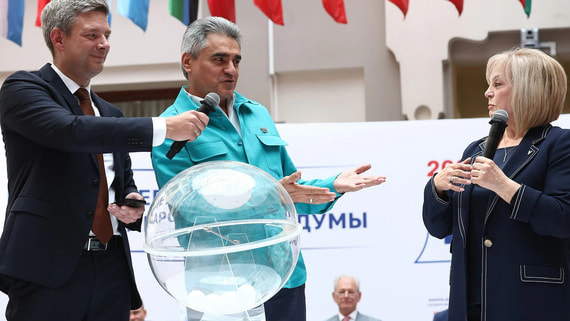
Representatives from eleven political parties gathered at Russia’s Central Election Commission (CEC) headquarters for the official ballot position lottery, a procedural yet symbolically significant event that determines the order in which parties will appear on voting ballots for the upcoming State Duma elections. The draw, conducted under strict oversight and in accordance with Russian electoral law, marks another milestone in the country’s parliamentary election cycle as parties prepare for what promises to be a competitive campaign season.
The Ballot Position Draw Process and Its Significance
The ballot position lottery is far more than a mere administrative formality in Russian electoral politics. Political strategists and campaign managers have long debated the psychological impact of ballot placement on voter behavior, with some studies suggesting that parties listed at the top of the ballot may receive a slight advantage, particularly among undecided voters. The CEC conducts this draw publicly to ensure transparency and fairness, with each participating party sending official representatives to witness and participate in the process. The procedure follows established protocols where party representatives draw lots to determine their position, eliminating any possibility of preferential treatment or manipulation.
Russia’s Multi-Party Electoral Landscape
The participation of eleven parties in the ballot draw reflects the multi-party nature of Russia’s formal electoral system, though the political landscape remains dominated by several key players. United Russia, the ruling party that has maintained a parliamentary majority for many years, typically enters elections as the frontrunner. Other established parties include the Communist Party of the Russian Federation (CPRF), the Liberal Democratic Party of Russia (LDPR), and A Just Russia, all of which have maintained consistent representation in the State Duma across multiple electoral cycles. Smaller parties face the challenge of meeting the electoral threshold required to gain parliamentary seats, making every aspect of their campaign, including ballot positioning, potentially consequential.
Historical Context of Russian Parliamentary Elections
The State Duma, the lower house of Russia’s Federal Assembly, consists of 450 deputies elected through a mixed system combining single-mandate constituencies and proportional representation through party lists. This electoral framework has undergone several modifications since its establishment following the 1993 constitutional reforms. The current system requires parties to surpass a five percent threshold in the proportional voting segment to gain seats, a barrier that has historically prevented smaller political movements from entering parliament. Election observers and political analysts typically monitor these processes closely, examining everything from campaign conduct to procedural elements like the ballot draw to assess the overall integrity of the electoral process.
Preparations for the Campaign Ahead
With ballot positions now determined, the participating parties will shift their focus to intensive campaigning in the weeks ahead. Each party will work to mobilize its base, attract undecided voters, and communicate its policy platform to the electorate. The campaign period in Russia is regulated by electoral laws that govern advertising, media access, and campaign financing. State Duma elections carry significant implications for Russia’s legislative agenda, as the composition of parliament influences policy-making, budget priorities, and the broader political direction of the country. The eleven parties that participated in the ballot draw represent a spectrum of political positions, though critics have noted that genuine political competition faces various constraints within the current system.
Expert Opinion: The ballot position draw, while procedurally routine, underscores the formalized nature of Russian electoral mechanics at a time when international observers continue to scrutinize the country’s democratic processes. With established parties dominating the political landscape and smaller movements struggling to gain traction, the upcoming State Duma elections are likely to reinforce existing power structures while offering limited opportunities for political newcomers to make significant inroads.