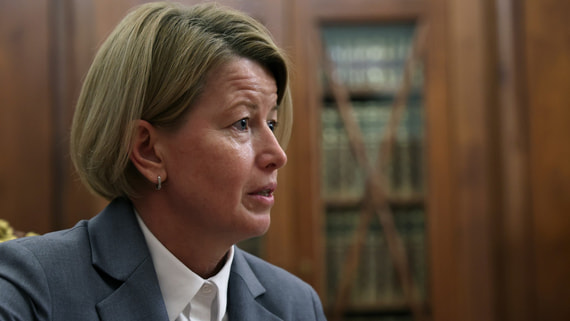
In a significant leadership change for one of Russia’s constituent republics, Olga Abramova has been appointed as the acting head of the Udmurt Republic. The appointment, announced by the Kremlin, marks a notable shift in the region’s governance as Abramova transitions from her previous role as an advisor to Russia’s Minister of Agriculture. This move comes as part of broader administrative reshuffling across Russian regions, with the federal government continuing to rotate regional leaders to ensure alignment with national priorities and maintain effective governance structures.
Abramova’s appointment has drawn considerable attention both within Udmurtia and across Russia’s political landscape. Colleagues and observers have described her management style as “sharp but tolerable,” suggesting a leader who combines decisiveness with pragmatism. This characterization indicates that while she may demand high standards and accountability from her subordinates, she remains approachable and reasonable in her administrative approach. Such qualities are often valued in regional leadership positions where balancing local interests with federal directives requires diplomatic finesse.
Background and Professional Experience
Olga Abramova’s career trajectory reflects the increasingly common pattern of federal officials being appointed to lead Russian regions. Her experience within the Ministry of Agriculture has equipped her with expertise in one of Udmurtia’s most crucial economic sectors. The republic, located in the western Ural region of Russia, has a significant agricultural industry that contributes substantially to both local employment and the regional economy. Her familiarity with agricultural policy and federal agricultural programs could prove advantageous as she takes the helm of a region where farming and food production play vital roles.
The position of regional governor in Russia carries substantial responsibilities, encompassing economic development, social services, infrastructure maintenance, and coordination with federal authorities. Abramova will be tasked with navigating complex challenges including budget management, maintaining social stability, and implementing federal policies at the local level. Her advisory role at the federal ministry suggests she has developed networks and relationships within Moscow’s corridors of power that could benefit Udmurtia in securing federal funding and attention for regional projects.
The Udmurt Republic: Context and Challenges
The Udmurt Republic, with its capital in Izhevsk, is home to approximately 1.5 million people and has historically been known for its defense industry, including the famous Kalashnikov weapons manufacturing concern. The region also has significant oil production capabilities and a diverse industrial base. However, like many Russian regions, Udmurtia faces challenges including demographic decline, economic diversification needs, and infrastructure modernization requirements. The new acting head will need to address these long-standing issues while maintaining the region’s industrial competitiveness.
Regional leadership transitions in Russia often signal shifts in federal priorities and expectations. The appointment of officials with specific sectoral expertise—in Abramova’s case, agriculture—can indicate areas where the Kremlin expects increased focus and development. With food security becoming an increasingly important national priority, particularly given international sanctions and geopolitical pressures, Abramova’s agricultural background may align well with federal objectives for enhanced domestic food production and rural development.
Looking Ahead: Expectations and Prospects
As Abramova assumes her new responsibilities, observers will be watching closely to see how her described management style translates into actual governance. The characterization of being “sharp but tolerable” suggests a leader who can make difficult decisions and enforce discipline while maintaining functional working relationships. In the complex environment of Russian regional politics, where balancing various interest groups and maintaining Moscow’s confidence are equally important, such qualities could prove essential for success.
The coming months will reveal whether Abramova can effectively leverage her federal connections and agricultural expertise to benefit the Udmurt Republic. Her success will likely be measured by her ability to maintain economic stability, address pressing social issues, and demonstrate effective leadership that satisfies both local constituents and federal authorities. As with all acting regional heads in Russia, her permanent appointment will ultimately depend on demonstrating competence and loyalty to the federal government’s broader strategic objectives.
Expert Opinion: The appointment of federal ministry officials to regional leadership positions reflects the Kremlin’s continued strategy of ensuring tight coordination between Moscow and the regions. Abramova’s agricultural background could signal increased federal attention to food security initiatives in the Urals region. Her success will largely depend on how effectively she can balance implementing federal mandates while addressing Udmurtia’s specific industrial and demographic challenges in an increasingly complex economic environment.