Throughout modern history, numerous nations have experienced prolonged periods where their heads of state came to power through means other than democratic elections. From revolutionary takeovers to hereditary successions disguised as republics, the phenomenon of unelected leaders continues to challenge the global understanding of legitimate governance. Nicaragua, Libya, Eritrea, and several other countries serve as prominent examples of political systems where citizens have been denied the fundamental right to choose their leaders through free and fair elections.
Nicaragua: The Ortega Dynasty’s Grip on Power
Nicaragua presents one of the most striking contemporary examples of democratic erosion in Latin America. Daniel Ortega, who first rose to prominence as a leader of the Sandinista revolution that overthrew the Somoza dictatorship in 1979, has transformed the Central American nation into what many analysts describe as a family-run authoritarian state. While Nicaragua technically holds elections, international observers and human rights organizations have consistently deemed these processes deeply flawed. Opposition candidates have been jailed, independent media outlets shuttered, and civil society organizations disbanded. The Ortega government, with First Lady Rosario Murillo serving as Vice President, has systematically dismantled democratic institutions, leaving citizens with no genuine electoral choice. Political analysts note that the situation mirrors the very dictatorship the Sandinistas once fought against, creating a troubling historical irony.
Libya Under Gaddafi: Four Decades Without Elections
Perhaps no modern leader embodied the concept of ruling without electoral mandate quite like Muammar Gaddafi of Libya. From 1969 until his overthrow and death in 2011, Gaddafi maintained absolute control over the oil-rich North African nation for 42 years without ever facing a genuine electoral challenge. He established what he called a “Jamahiriya” or “state of the masses,” a political system he outlined in his famous Green Book. In theory, this system was supposed to represent direct democracy through local councils, but in practice, all power remained concentrated in Gaddafi’s hands. The Libyan leader cultivated an elaborate cult of personality, styling himself as the “Brother Leader” and “Guide of the Revolution” rather than president or prime minister. His regime suppressed all political opposition, controlled the press absolutely, and used oil revenues to maintain a complex system of patronage and repression that kept him in power until the Arab Spring uprisings finally ended his rule.
Eritrea: Africa’s North Korea
Eritrea, a small nation on the Horn of Africa, has earned the grim nickname “Africa’s North Korea” due to its extreme isolation and authoritarian governance. President Isaias Afwerki has ruled the country since it gained independence from Ethiopia in 1993, making him one of the world’s longest-serving leaders. Not a single presidential election has been held in Eritrea’s entire history as an independent nation. The constitution adopted in 1997 was never implemented, and the promised elections have been perpetually postponed with various justifications, primarily citing the unresolved border conflict with neighboring Ethiopia. Eritrea has no independent judiciary, no free press, and operates one of the world’s most extensive systems of indefinite military conscription, which human rights organizations have likened to modern slavery. Tens of thousands of Eritreans have fled the country, making it one of the largest sources of refugees relative to its population size globally.
Historical Patterns and Modern Implications
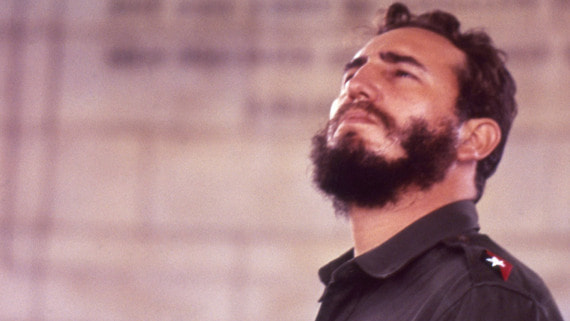
The phenomenon of unelected leaders extends beyond these prominent examples. Turkmenistan, under both Saparmurat Niyazov and his successor Gurbanguly Berdimuhamedov, has maintained an authoritarian system with staged elections offering no real choice. Cuba operated for decades under the Castro brothers without competitive elections, and North Korea’s Kim dynasty has ruled for three generations through a hereditary system masked as a socialist republic. These cases reveal common patterns: leaders often come to power through revolution or military coup, establish personality cults, eliminate political opposition, control information flow, and create constitutional frameworks that legitimize their indefinite rule. International organizations, including the United Nations and various human rights bodies, have repeatedly condemned these practices, yet the international community’s tools for addressing such situations remain limited, particularly when strategic interests or powerful allies are involved.
Expert Opinion: The persistence of unelected leaders in the 21st century demonstrates that democratic transitions are neither inevitable nor irreversible. Political scientists increasingly warn that authoritarian resilience, combined with sophisticated propaganda techniques and international support from other non-democratic states, may allow such regimes to endure longer than previously anticipated. The international community must develop more effective mechanisms to support civil society and democratic movements within these nations while maintaining diplomatic pressure on their governments.