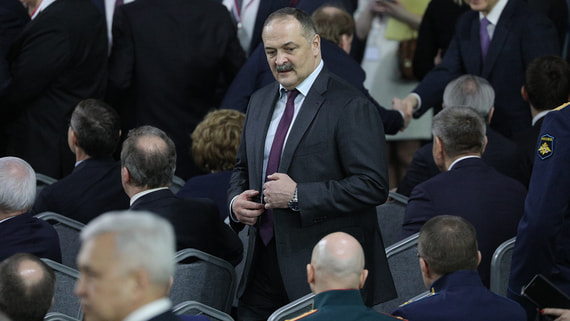
Sergei Melikov, who recently stepped down as the head of the Republic of Dagestan, is reportedly being considered for a position in Russia’s Federation Council. According to sources familiar with the matter, the former regional leader may soon represent Bryansk Oblast in the upper chamber of Russia’s parliament. This potential appointment marks a significant transition for the 58-year-old official who has had a distinguished career spanning military service and regional governance.
The news comes amid ongoing reshuffles in Russian regional leadership, as the Kremlin continues to rotate officials between different positions of authority. Melikov’s departure from Dagestan was announced earlier this year, following his tenure that began in October 2020 when he was initially appointed as acting head of the North Caucasus republic before being confirmed in the position through regional elections.
A Career Spanning Military and Civilian Leadership
Sergei Melikov’s path to potential senatorial office reflects a career trajectory common among Russian officials who transition between military and civilian roles. Born in 1966, Melikov graduated from military institutions and rose through the ranks of Russia’s security apparatus. He achieved the rank of Colonel General and served as the first deputy director of the National Guard of Russia (Rosgvardiya) before his appointment to lead Dagestan. His military background was seen as particularly relevant for governing the North Caucasus region, which has historically faced security challenges including insurgency and terrorism.
During his tenure in Dagestan, Melikov faced numerous challenges including managing the republic’s complex ethnic composition, addressing economic development needs, and maintaining security in a region that shares borders with Georgia and Azerbaijan. The republic, Russia’s southernmost region, is known for its diverse population comprising dozens of ethnic groups and its strategic importance in the Caucasus region. Melikov’s administration worked on infrastructure projects and social programs, though his term was not without controversy and criticism from various quarters.
The Federation Council and Regional Representation
The Federation Council serves as the upper house of Russia’s Federal Assembly, with each of Russia’s 89 federal subjects represented by two senators. One senator is appointed by the regional legislature, while the other is appointed by the regional governor. The appointment of former regional heads to senatorial positions is a well-established practice in Russian politics, often serving as a way to provide continued political roles for officials transitioning out of executive positions. Notable former governors and republic heads have followed similar paths, maintaining their influence in federal politics while representing regions sometimes different from those they previously governed.
Bryansk Oblast, the region Melikov may potentially represent, is located in western Russia bordering Belarus and Ukraine. The region has taken on heightened significance since 2022 due to its proximity to the conflict zone in Ukraine, experiencing periodic security incidents along its border. The appointment of a former military official and regional executive with security experience could be seen as particularly relevant for representing this strategically sensitive area in the Federation Council.
Implications for Russian Regional Politics
The potential appointment reflects broader patterns in Russian governance where officials circulate between different levels and branches of government. This system of elite rotation allows the Kremlin to maintain experienced personnel in positions of influence while managing regional leadership transitions. For Melikov, a Federation Council seat would provide continued access to federal decision-making processes and maintain his status within Russia’s political establishment. The move also ensures continuity of governance experience, as former regional leaders bring practical administrative knowledge to legislative deliberations on regional policy matters.
Political analysts note that such appointments serve multiple purposes in the Russian political system. They reward loyal service, provide soft landings for officials leaving demanding executive positions, and maintain institutional memory within federal legislative bodies. As Russia continues to navigate complex domestic and international challenges, the expertise of officials like Melikov who have managed difficult regions remains valuable in shaping federal policy approaches to regional governance and security matters.
Expert Opinion: Melikov’s potential transition to the Federation Council represents a classic example of Russia’s political elite circulation system, where experienced administrators are retained within the power vertical rather than being removed entirely. His military background and Caucasus governance experience could prove valuable in senatorial discussions on security and regional development policy, particularly given Bryansk’s current strategic importance. This appointment, if confirmed, suggests continued Kremlin confidence in Melikov despite his departure from Dagestan’s leadership.