
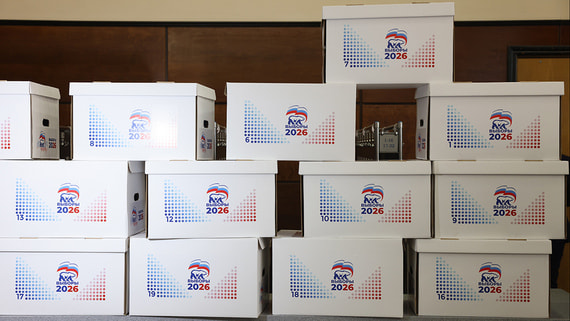
Russia’s Central Election Commission (CEC) has certified documents from six out of eleven political forces participating in the upcoming State Duma elections, marking a critical milestone in the electoral process. However, the remaining parties face significant hurdles as they navigate the complex registration requirements that could determine their ability to compete for parliamentary seats. The certification process serves as a crucial gatekeeping mechanism that ensures only parties meeting strict legal criteria can appear on the ballot.
The Complex Registration Process and Its Requirements
The registration of party lists with the Central Election Commission represents one of the most challenging phases of the Russian electoral cycle. Political parties must submit extensive documentation, including verified lists of candidates, financial disclosures, and proof of compliance with electoral legislation. The CEC conducts thorough reviews of all submitted materials, checking for accuracy, completeness, and adherence to legal requirements. Any discrepancies, even minor clerical errors, can result in rejection or delays that prove fatal to a party’s electoral ambitions.
Historically, the registration process has served as a significant barrier to entry for smaller and newer political movements. Parties that do not hold seats in the current Duma or regional legislatures face additional requirements, including the collection of hundreds of thousands of voter signatures to demonstrate public support. These signatures undergo rigorous verification, with strict thresholds for invalid entries. If more than a specified percentage of signatures are deemed fraudulent or improperly collected, the entire submission can be invalidated, effectively ending a party’s campaign before it begins.
Historical Context of Electoral Registration in Russia
The current system of party registration has evolved considerably since the early post-Soviet era. In the 1990s, the electoral landscape was characterized by dozens of competing parties, many of which struggled to establish lasting organizational structures. Subsequent reforms tightened registration requirements, ostensibly to prevent electoral fraud and ensure only serious political organizations could participate. Critics, however, have argued that these stricter rules disproportionately affect opposition movements and smaller parties, effectively consolidating the political field around established players.
The State Duma, Russia’s lower house of parliament, consists of 450 seats, with half elected through party lists using proportional representation and half through single-member constituencies. To gain seats through the proportional system, parties must clear a five percent electoral threshold nationally. This means that even successful registration does not guarantee parliamentary representation—parties must then convince millions of voters to support their platforms. The combination of registration challenges and electoral thresholds creates a formidable obstacle course for political newcomers.
Current Challenges and Party Responses
The five parties that have not yet received certification face varying degrees of difficulty. Some may be dealing with technical issues in their documentation that can be remedied within the established timeframes. Others might be struggling with the signature collection requirements, a process that demands significant organizational capacity and financial resources. The CEC has established deadlines for addressing deficiencies, and parties that fail to meet these deadlines will be excluded from the ballot entirely.
Political analysts note that the registration phase often reveals the true organizational strength of Russian political parties. Well-established parties with parliamentary representation, such as United Russia, the Communist Party, the Liberal Democratic Party, and A Just Russia, typically navigate this process smoothly due to their exemption from signature requirements and their experienced administrative apparatus. Newer movements or those seeking to reenter the political arena after periods of inactivity face considerably steeper challenges, requiring them to mobilize supporters and resources during a compressed timeframe.
Implications for Democratic Participation
The outcome of the registration process carries significant implications for the diversity of political choice available to Russian voters. Each party that fails to achieve registration represents a set of policy positions and constituencies that will not be directly represented in the electoral contest. International observers and democracy advocates have long scrutinized Russia’s registration procedures, arguing that the system should balance the legitimate need to prevent fraud with the democratic imperative of broad political participation. As the remaining parties work to satisfy CEC requirements, the coming weeks will determine the final composition of the ballot and, ultimately, the range of voices competing for influence in Russia’s legislative branch.
Expert Opinion: The registration bottleneck experienced by nearly half of the participating parties underscores systemic challenges in Russia’s electoral framework that tend to favor incumbent political forces. As the certification deadline approaches, we can expect some parties to successfully address technical deficiencies while others may be permanently sidelined, potentially reducing voter choice and reinforcing existing power structures in the upcoming Duma composition.