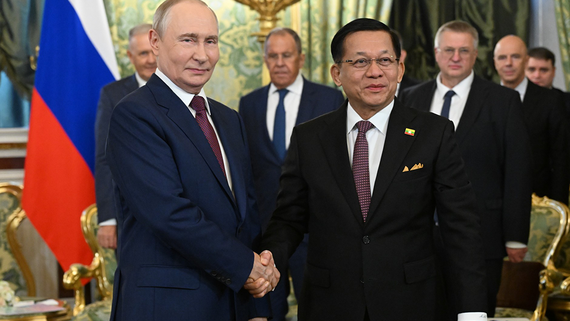
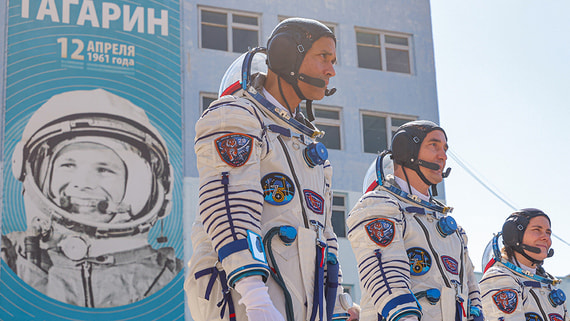
In a significant development for international space cooperation, Russia and the United States have reached an agreement to continue operating the International Space Station through the end of 2030. This decision marks an important milestone in the history of the orbital laboratory, which has served as humanity’s continuous presence in space for nearly a quarter century. The agreement comes amid broader geopolitical tensions between the two nations, demonstrating that scientific collaboration in space continues to transcend earthly political disputes.
The announcement signals a commitment from both spacefaring nations to maximize the scientific return from the ISS before its eventual decommissioning. Furthermore, officials have indicated that technical cooperation between Russia and the United States may continue beyond the ISS era, with potential collaboration on lunar exploration projects representing the next frontier of joint space endeavors.
A Legacy of International Cooperation
The International Space Station represents one of the most ambitious engineering projects in human history and stands as a testament to what nations can achieve when working together toward common goals. Construction of the station began in 1998 with the launch of the Russian Zarya module, followed shortly by the American Unity node. Since November 2000, the ISS has been continuously inhabited, marking over 24 years of uninterrupted human presence in low Earth orbit. The station, which is roughly the size of a football field and weighs approximately 420,000 kilograms, orbits Earth at an altitude of about 400 kilometers, completing one orbit every 90 minutes.
Throughout its operational history, the ISS has hosted more than 270 astronauts and cosmonauts from 21 different countries. The station serves as a microgravity research laboratory where scientists conduct experiments in biology, physics, astronomy, meteorology, and other fields that would be impossible to perform on Earth. Research conducted aboard the ISS has contributed to advances in medicine, materials science, and our understanding of how the human body adapts to long-duration spaceflight—knowledge essential for future missions to the Moon and Mars.
Technical Challenges and Aging Infrastructure
As the ISS approaches its third decade of operation, engineers from both NASA and Roscosmos face increasing challenges in maintaining the aging infrastructure. The station has experienced several technical issues in recent years, including air leaks in the Russian segment and occasional equipment malfunctions. Despite these challenges, continuous maintenance and upgrades have kept the station operational well beyond its original 15-year design life. The decision to extend operations until 2030 reflects confidence in the ability of international teams to maintain the station’s safety and functionality.
NASA has been working on plans for the station’s eventual deorbiting, which will require careful coordination to ensure the massive structure safely reenters Earth’s atmosphere over unpopulated ocean areas. The space agency has contracted with private companies to develop a deorbit vehicle that will guide the station to a controlled reentry. Meanwhile, both American and Russian space agencies are investing in next-generation space stations, with commercial platforms expected to eventually replace the ISS as destinations for research and tourism in low Earth orbit.
Future Lunar Cooperation Prospects
Perhaps most intriguing is the suggestion that technical cooperation between Russia and the United States could extend to lunar exploration. While NASA is currently focused on its Artemis program, which aims to return humans to the Moon and establish a sustainable presence there, Russia has been developing its own lunar ambitions, including partnerships with China on the International Lunar Research Station project. Any future US-Russia cooperation on the Moon would represent a significant diplomatic achievement and could help distribute the enormous costs and technical challenges associated with establishing a permanent human presence on Earth’s celestial neighbor.
The history of space exploration has shown that international partnerships often yield results greater than any single nation could achieve alone. As humanity looks toward establishing outposts on the Moon and eventually Mars, the lessons learned from decades of cooperation aboard the ISS will prove invaluable. The agreement to continue ISS operations through 2030 ensures that this unique platform for international scientific collaboration will continue serving its vital role for several more years, while laying the groundwork for even more ambitious joint ventures in the cosmos.
Expert Opinion: The extension of ISS operations to 2030 represents a pragmatic recognition that space cooperation remains one of the few areas where US-Russia relations can function productively despite broader tensions. This agreement likely reflects both nations’ understanding that abruptly ending ISS operations would harm their respective space programs and scientific communities. Looking ahead, any substantive lunar cooperation will require significant diplomatic progress, but the technical foundations built through ISS partnership provide a valuable template for future collaboration in deep space exploration.