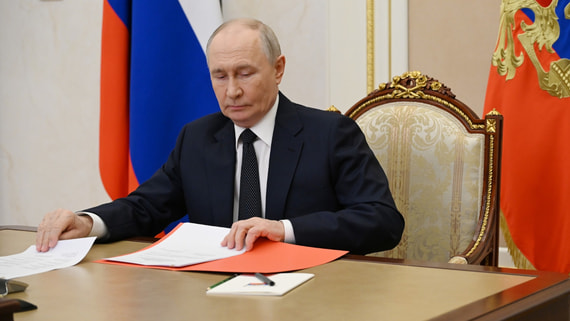
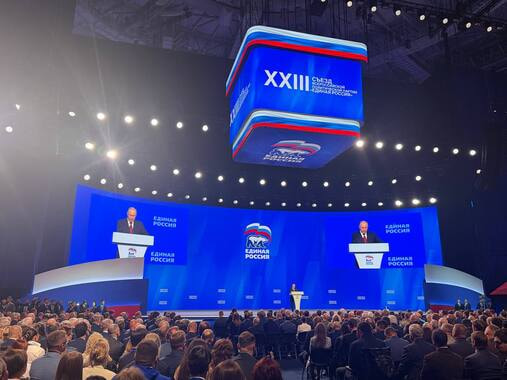
Russian President Vladimir Putin delivered a significant address at the United Russia party congress, emphasizing that the upcoming elections will serve as a crucial indicator of the nation’s stability and resilience. The president’s speech, delivered to party members and delegates, outlined the government’s priorities and framed the electoral process as a fundamental test of Russia’s political system during a period of unprecedented challenges.
Putin stressed that the elections represent far more than a routine political exercise, describing them as the most important evidence of state sustainability. This characterization reflects the Kremlin’s broader narrative positioning Russia’s political institutions as sources of strength and continuity amid ongoing international tensions and domestic pressures. The president’s remarks come at a time when Russia faces extensive Western sanctions and continues its military operations in Ukraine, making internal political cohesion a top priority for the government.
United Russia’s Dominant Role in Russian Politics
United Russia has maintained its position as the dominant political force in the country since its formation in 2001. The party, which emerged from a merger of the Unity and Fatherland-All Russia parties, has consistently held supermajorities in the State Duma and controls most regional legislatures. While Putin has never officially joined the party, he has served as its de facto leader and primary political patron, lending his personal popularity to the organization during electoral campaigns. The party currently holds over 300 seats in the 450-member State Duma, giving it the constitutional majority needed to pass virtually any legislation without opposition support.
The relationship between Putin and United Russia has evolved over the decades, with the party serving as the primary vehicle for implementing the president’s policy agenda. Critics and opposition figures have long argued that the party functions less as an independent political organization and more as an extension of the executive branch, rubber-stamping government initiatives rather than engaging in genuine legislative debate. Nevertheless, the party maintains extensive organizational infrastructure throughout Russia’s regions, with millions of registered members and supporters.
Electoral Context and Political Implications
The upcoming elections take place against a complex political backdrop that has seen significant changes in Russia’s civil society landscape. Over the past several years, many opposition figures have been imprisoned, forced into exile, or barred from participating in elections. International observers and human rights organizations have raised concerns about the fairness of Russian elections, pointing to restrictions on independent candidates, limited media access for opposition voices, and alleged irregularities in vote counting procedures. The Russian government has consistently rejected these criticisms, maintaining that its electoral processes meet democratic standards.
Putin’s emphasis on elections as proof of state stability echoes themes he has articulated throughout his political career. The concept of stability has been central to his governance philosophy since first assuming the presidency in 2000, when Russia was emerging from the chaotic 1990s marked by economic collapse, oligarch influence, and regional conflicts. For many Russians, particularly older generations, this stability narrative resonates strongly with their lived experiences of the turbulent post-Soviet transition period. The president’s framing of elections in these terms serves to reinforce the message that political continuity under current leadership represents the safest path forward for the nation.
Looking Ahead: Challenges and Prospects
As Russia prepares for its next electoral cycle, the stakes extend beyond domestic politics. The results will be closely watched by international observers seeking to gauge public sentiment and the government’s grip on power during an extended period of conflict and economic pressure. How Russian citizens engage with the electoral process, turnout figures, and the margins of victory will all be analyzed for signals about the country’s political trajectory. For the Kremlin, delivering strong results for United Russia and demonstrating broad public support remains essential to projecting both domestic legitimacy and international strength during one of the most challenging periods in recent Russian history.
Expert Opinion: Putin’s framing of elections as evidence of state sustainability suggests the Kremlin is preparing to leverage electoral outcomes as political capital both domestically and internationally. Strong turnout and decisive results for United Russia would allow the government to claim a mandate for its current policies, while any signs of voter apathy or protest voting could be interpreted as cracks in the foundation of public support. The emphasis on stability over reform indicates continuity will remain the dominant theme of Russian governance for the foreseeable future.